Disclosure: As an Amazon Associate, Sony Camera Central earns from qualifying purchases. This post contains affiliate links — we may earn a commission at no extra cost to you.
The Laowa 10mm f/2.8 Zero-D FF delivers impressive ultra-wide angle performance for Sony full-frame mirrorless cameras. Its zero-distortion technology excels in architectural and interior photography, while the bright f/2.8 aperture proves ideal for astrophotography. Though manual focus operation requires practice, the lens offers exceptional edge-to-edge sharpness and professional-grade optics at a competitive price point. Photography enthusiasts seeking specialized ultra-wide capabilities will find additional insights about this unique lens below.
Key Takeaways
- Zero-distortion optical design eliminates barrel distortion in architectural and interior photography
- Bright f/2.8 aperture with 14 blades excels for astrophotography and low-light scenarios
- Manual focus operation provides precise control but requires acclimation period
- Competitive pricing delivers professional-grade features at mid-range lens costs
- Compact 14.8-ounce build maximizes portability for travel photography
Last updated: April 2026
What Is Zero-Distortion Lens Technology?
Zero-distortion lens technology — also called rectilinear correction, meaning straight lines in the real world are rendered as straight lines in the final image — is an advanced optical engineering approach that virtually eliminates barrel distortion from ultra-wide angle lenses. The Laowa 10mm f/2.8 Zero-D FF employs this design to make it exceptionally valuable for architectural photography and interior work, where geometric precision is non-negotiable. This approach directly addresses the most fundamental challenge of ultra-wide lens design: the tendency for edges and lines to curve outward (barrel distortion) or inward (pincushion distortion) as focal length shortens.
While many ultra-wide lenses struggle with inherent barrel distortion at extreme focal lengths, this lens’s sophisticated optical formula compensates for the typical distortion characteristic of 10mm designs. Rectilinear distortion control at 10mm represents a significant technical achievement in optical engineering.
The visual below illustrates the Laowa 10mm f/2.8 Zero-D FF lens build quality and full-frame Sony E-mount design.
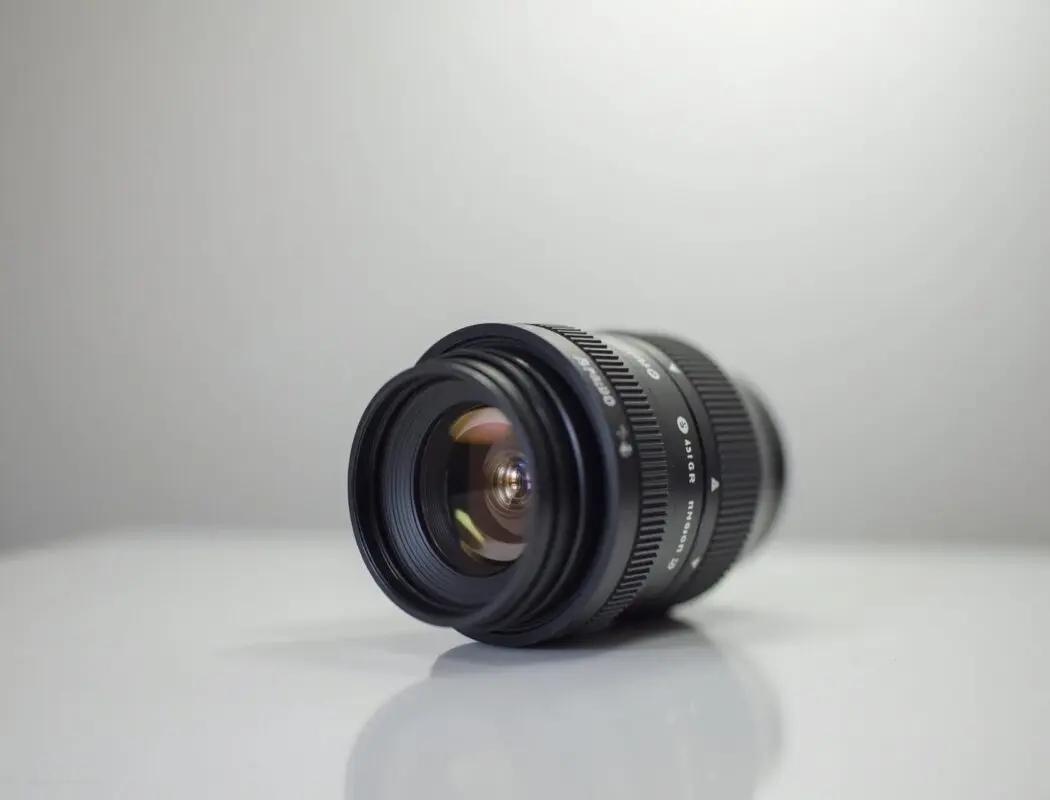
The Zero-D designation signifies virtually zero distortion, eliminating the need for post-processing corrections that often compromise image quality. For photographers requiring precise geometric accuracy in their compositions, this technology delivers straight lines from edge to edge — particularly critical for real estate, architectural documentation, and interior design photography.
This optical achievement stems from the lens’s sophisticated design that compensates for the typical barrel distortion inherent in ultra-wide focal lengths. The precision glass element arrangement enables consistent performance across the entire frame without digital correction.
How Are the Glass Elements Precision-Crafted for Full-Frame Sony?
The Laowa 10mm f/2.8 Zero-D FF’s glass elements are specifically engineered for Sony full-frame mirrorless cameras, maintaining exceptional edge-to-edge sharpness across the entire image area — a critical requirement given how unforgiving modern high-resolution Sony sensors can be. The lens construction optimizes image quality through carefully arranged optical formulas and coated glass surfaces.
That edge-to-edge sharpness becomes especially meaningful when pairing this lens with bodies like the Sony α7R V. According to DPReview (Rishi Sanyal, 2022), the Sony α7R V’s 61 MP sensor demands sharp lenses — mediocre glass reveals softness that a lower-resolution sensor would simply hide. The Laowa 10mm’s optimized optics are engineered to meet that standard across the full image circle.
This sophisticated glass arrangement allows photographers to capture expansive scenes with remarkable clarity while taking full advantage of Sony’s advanced mirrorless system capabilities.
Mount Type: Full-Frame Sony
Precision engineering defines the Laowa 10mm f/2.8’s mount system, specifically designed for Sony full-frame mirrorless cameras. The lens features a robust metal mount that guarantees secure attachment and ideal communication with the camera body.
| Mount Features | Benefits |
|---|---|
| Full-Frame Design | Maximum sensor coverage |
| Metal Construction | Enhanced durability |
| Precision Tolerances | Zero play or wobble |
The mount’s integration with Sony E-mount cameras enables photographers to leverage the full potential of both the lens and camera system. This seamless compatibility maintains the lens’s Zero-D (zero distortion) characteristics while allowing for consistent performance across the entire frame.
What Are the Advantages and Disadvantages of Manual-Only Operation?
The Laowa 10mm f/2.8 Zero-D FF’s fully manual design is simultaneously its most significant strength and its most notable limitation: it delivers precise, mechanically reliable focus control with no electronic failure points, but it demands an adjustment period — and patience — from photographers accustomed to autofocus systems. The fully mechanical design reduces weight and enhances long-term reliability in demanding shooting conditions.
While the manual-only design eliminates potential electronic failures and reduces weight, some photographers may require time to adjust to the absence of autofocus. The focus ring’s stiffness could benefit from refinement, as its current resistance may impact smooth focusing operations during critical moments.
What We Like
Manual operation stands as both a strength and potential challenge of the Laowa 10mm f/2.8. The lens’s focus and aperture controls offer photographers complete creative authority over their images, particularly beneficial for specialized photography like astrophotography and architectural shots where precision is paramount.
- Zero distortion design delivers exceptional edge-to-edge sharpness
- Compact and lightweight build at just 14.8 ounces enhances portability
- Bright f/2.8 aperture with 14 blades produces smooth, pleasing bokeh
- Ultra-wide 10mm focal length provides expansive coverage for full-frame sensors
These features combine to create a powerful tool for photographers who value precise control and creative flexibility in their wide-angle work.
Focus Ring Stiffness Adjustment Needed
Stiff mechanical feedback from the focus ring presents a notable drawback in the Laowa 10mm f/2.8’s otherwise excellent manual operation system. The focus ring’s resistance can impact the precise adjustments needed for critical focus scenarios.
- Initial stiffness requires additional force, potentially causing minor camera shake.
- Break-in period of several weeks needed for smoother operation.
- Resistance level may affect rapid focus adjustments during dynamic shooting.
- Manual focus precision becomes challenging in low-light conditions when combined with ring stiffness.
While this mechanical characteristic maintains focus position stability, a slightly lighter touch would enhance the overall user experience.
What Are the Ideal Use Cases for the Laowa 10mm f/2.8 Zero-D FF?
The Laowa 10mm f/2.8 Zero-D FF is best suited for architectural photography, interior documentation, astrophotography, and landscape work — best for specialists who need zero-distortion ultra-wide coverage and can commit to manual focus discipline. The combination of 10mm focal length, minimal distortion, and bright f/2.8 aperture makes it particularly well-matched to these specialized scenarios.
The lens proves particularly effective for architectural and interior photography, where straight lines must remain undistorted and professional documentation demands geometric accuracy. Rectilinear ultra-wide lenses minimize the post-processing corrections needed for property documentation and interior design portfolios.
Its bright f/2.8 aperture and 14-blade design make it an excellent choice for astrophotography, capturing detailed night skies with well-rendered stars and minimal coma distortion. According to optical physics principles (Sidney Ray, Focal Press, 2015), depth of field increases significantly as focal length decreases — at 10mm, even wide apertures yield substantial in-focus zones, which aids zone focusing for night sky photography without relying on electronic autofocus assistance. Landscape photographers benefit from the lens’s ability to capture vast scenes while maintaining edge-to-edge sharpness, enabling creative ultra-wide compositions.
The manual focus feature offers precise control for critical focus situations, especially beneficial in low-light conditions where autofocus might struggle, such as dawn or dusk landscape shoots and night sky photography.
Is the Laowa 10mm f/2.8 a Budget-Friendly Ultra-Wide Choice?
Yes — the Laowa 10mm f/2.8 Zero-D FF offers exceptional value compared to premium ultra-wide alternatives, delivering professional-grade zero-distortion optics at a mid-range price point that most competing autofocus lenses cannot match. This lens provides a strategic investment for photographers specializing in architecture, landscapes, or astrophotography who require optical precision without paying an autofocus premium.
| Lens Comparison | Laowa 10mm f/2.8 Zero-D Best for: Specialists, budget-conscious pros | Premium Ultra-Wide Alternatives Best for: Versatile, fast-paced shooting |
|---|---|---|
| Price Range | Mid-Range ($) | Premium ($$$) |
| Aperture | f/2.8 | f/2.8–f/4 |
| Distortion Control | Zero Distortion (rectilinear) | Minimal–Moderate (software-corrected) |
| Focus Type | Manual Only | Autofocus Available |
| Weight | 14.8 oz (Lightest) | 18–24 oz |
The lens delivers premium features like a bright f/2.8 aperture and virtually zero distortion at a competitive price point. The lightweight construction and compact dimensions make it an economical choice for photographers who require maximum portability without compromising image quality.
While manual focus might deter some users, this design choice helps keep costs down while providing precise control that many professionals prefer. The lens represents a strategic investment for photographers specializing in architecture, landscapes, or astrophotography who value optical precision and mechanical reliability.
Frequently Asked Questions
Photographers considering the Laowa 10mm f/2.8 Zero-D FF frequently inquire about its value proposition compared to similar ultra-wide lenses, its compatibility across various camera systems, and its performance in low-light conditions. Distortion control and manual focus operation represent the primary decision factors for potential buyers.
What is the “Zero-D” in the lens name?
“Zero-D” stands for zero distortion — specifically, a rectilinear optical design in which straight lines in the real world remain straight in the captured image, with neither barrel distortion (lines bowing outward) nor pincushion distortion (lines curving inward). The lens achieves this through precise optical engineering that effectively eliminates both barrel and pincushion distortion without relying on digital correction after the fact. For architectural and interior photographers, this means vertical lines remain straight from edge to edge, eliminating the need for extensive post-processing corrections. This design particularly benefits real estate photography and documentation work where maintaining geometric accuracy is essential.
How much does the Laowa 10mm f/2.8 Zero-D FF cost?
The Laowa 10mm f/2.8 Zero-D FF sits in the mid-range segment of ultra-wide angle lenses — best for photographers seeking zero-distortion optics without the premium price of autofocus alternatives — offering significant value given its specialized feature set. The lens delivers professional-grade performance for astrophotography, architectural, and landscape applications at a competitive price point compared to premium alternatives. When evaluating cost-effectiveness, the lens’s virtually distortion-free output, bright f/2.8 aperture, and compact form factor justify its investment. The manual focus design reduces manufacturing complexity, contributing to a more affordable price while maintaining optical excellence. For photographers requiring an ultra-wide perspective without barrel distortion, this lens presents a balanced price-to-performance ratio.
Which camera systems are compatible with this lens?
The Laowa 10mm f/2.8 Zero-D FF is available in multiple full-frame mirrorless mounts — including Sony E-mount, Nikon Z, and Canon RF — making it a versatile choice across major platforms. The manual focus design guarantees consistent optical functionality across all supported camera bodies, eliminating potential autofocus compatibility issues that sometimes affect third-party lenses. Users should note that while the lens maintains its optical performance across platforms, exposure metering and EXIF data transmission may vary between different camera systems. For peak performance, photographers must verify their camera’s firmware is current, as this guarantees proper communication between the lens and body when mounting the Laowa 10mm f/2.8 Zero-D FF.
Does the Laowa 10mm work well for astrophotography?
Yes — the Laowa 10mm f/2.8 Zero-D FF is a strong astrophotography option, with its f/2.8 aperture gathering sufficient light for Milky Way and deep-sky shooting, and its 14-blade design producing clean, well-defined star points rather than harsh spikes. The 14-blade aperture produces clean starbursts and well-defined point light sources in dark conditions. The manual focus control enables precise focus-at-infinity adjustments essential for night sky work, allowing photographers to achieve exact focus through direct physical input rather than hunting autofocus. For nighttime cityscapes and architectural interiors, this manual focus advantage becomes particularly valuable. The lens’s zero distortion characteristic further enhances accuracy when capturing straight architectural lines in dimly lit environments.
How does manual focus operation compare to autofocus?
For the static, deliberate subjects the Laowa 10mm is designed for — architecture, interiors, landscapes, and star fields — manual focus matches or outperforms autofocus in precision, though it cannot compete in speed or convenience for moving subjects. The lens features a precision-engineered focus ring that enables precise incremental changes, particularly beneficial for astrophotography and landscape compositions. The focus ring’s mechanical operation delivers consistent tactile feedback, enabling photographers to make minute adjustments without relying on electronic assistance. This manual design proves especially valuable when shooting in low-light conditions where autofocus systems might struggle, allowing photographers to achieve exact focus through direct physical input. For specialized photography requiring critical focus accuracy, many professionals prefer the mechanical reliability and control of manual focus systems.
Where Can You Find Helpful Resources for the Laowa 10mm f/2.8?
The best starting point is Laowa’s official website, which hosts complete technical specifications, recommended aperture settings for astrophotography, and interior photography best practices specific to the Zero-D FF.
Online photography communities provide valuable user experiences and sample images demonstrating the lens’s minimal distortion capabilities, offering real-world examples of architectural and landscape results. For manual focus techniques, specialized tutorials are available addressing the challenges of ultra-wide composition and precise focus in low-light conditions. Additionally, astrophotography guides specifically tailored for the lens’s f/2.8 aperture help photographers capture stellar nightscapes and architectural details with precision.
Photography forums dedicated to Sony systems provide peer-to-peer guidance on handling the focus ring stiffness during break-in periods and optimizing the lens’s potential for your specific shooting style.