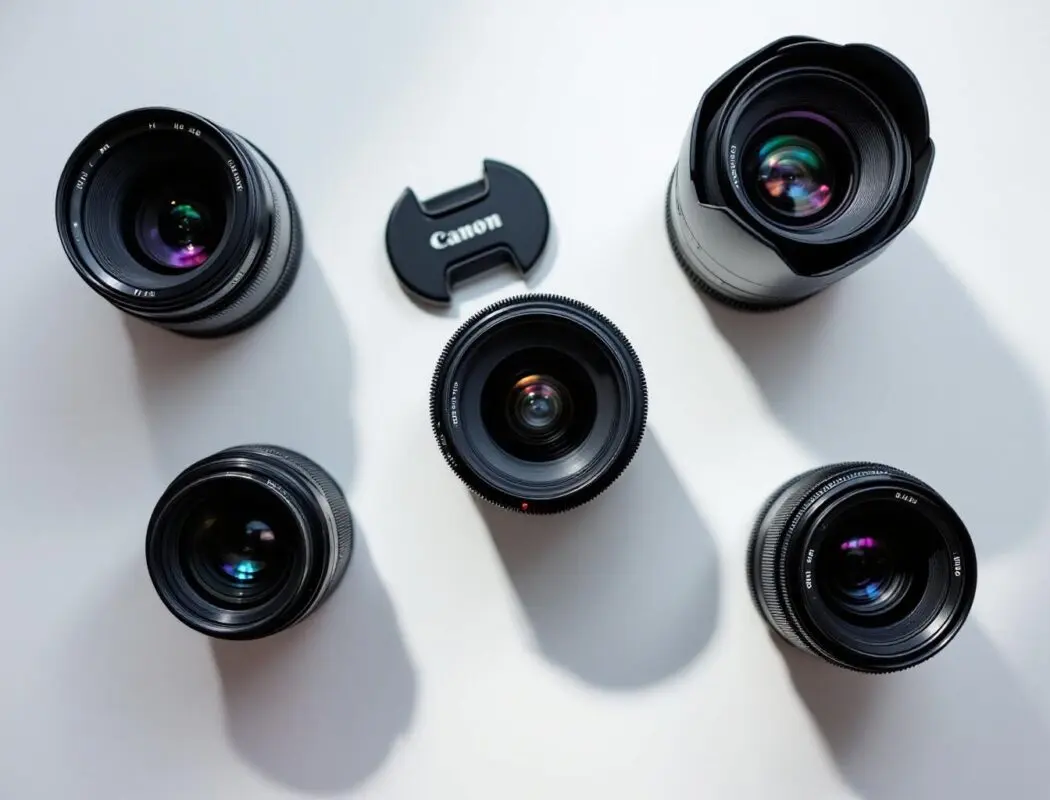
The best budget Sony E-mount lenses under $500 deliver image quality, autofocus performance, and build quality that would have been unthinkable at these price points five years ago. Third-party manufacturers like Sigma, Tamron, and Viltrox have pushed lens technology into a price bracket where a $300 prime can produce images that rival lenses costing three times as much. Whether you shoot on an APS-C body like the a6700 or ZV-E10 II, or a full-frame camera like the A7C II or A7IV, this guide covers the lenses that give you the most capability per dollar spent.
Last updated: April 2026
- Best APS-C portrait prime: Sigma 30mm f/1.4 DC DN Contemporary at ~$289 — 45mm equivalent with f/1.4 bokeh.
- Best general-purpose zoom (APS-C): Tamron 17-70mm f/2.8 Di III-A RXD at ~$479 — constant f/2.8 replaces kit lens completely.
- Best budget full-frame prime: Sony FE 50mm f/1.8 at ~$248 — most affordable native full-frame lens in the system.
- Best portrait lens (full-frame): Viltrox 85mm f/1.8 II FE at ~$349–$399 — professional-grade 85mm at a fraction of native Sony pricing.
- Best wide-angle (APS-C): Sigma 16mm f/1.4 DC DN Contemporary at ~$369 — 24mm equivalent for astrophotography, vlogging, and interiors.
Every lens in this guide is under $500 at current retail pricing, uses the Sony E-mount natively (no adapter required), and has autofocus. These are not adapted manual focus bargains — they are modern, auto-focusing lenses that integrate fully with Sony’s AF system including eye detection and subject tracking.
What Are the Best Budget Sony E-Mount Lenses for 2026?
The best budget Sony E-mount lenses for 2026 include the Sigma 30mm f/1.4 DC DN Contemporary (Best for: APS-C portrait and general shooting) for APS-C portrait and general shooting, the Tamron 17-70mm f/2.8 Di III-A RXD (Best for: All-in-one zoom for APS-C) as the best all-in-one zoom for APS-C, the Sony FE 50mm f/1.8 (Best for: Most affordable full-frame prime) as the most affordable full-frame prime, and the Viltrox 85mm f/1.8 II (Best for: Budget portrait photography on full-frame) for budget portrait photography on full-frame bodies. According to DPReview (2021), the Sigma 105mm F2.8 DG DN Macro Art demonstrates “near-flawless suppression of longitudinal chromatic aberration, a rarity for production macro lenses”—a standard that extends to Sigma’s prime offerings. Each lens excels in specific use cases, and the right choice depends on your sensor format (APS-C or full-frame), primary shooting style, and whether you prioritize zoom flexibility or prime lens speed.
Best Budget Sony Lens for Portraits
The Sony FE 50mm f/1.8 remains one of the most accessible entry points for full-frame portraiture, but buyers must be acutely aware of its severe mechanical limitations before purchasing. At 50mm, you can work in tighter rooms and shoot environmental portraits with a gentle background roll-off, but its aging internal technology is a major bottleneck for modern hybrid shooters.
The primary issue lies in the autofocus motor. This lens utilizes an older DC motor design that is notably slower and significantly louder than the modern stepping motors (STM) found in Sigma, Tamron, and Viltrox alternatives. For video shooters, this is a massive red flag: the focus motor noise is highly audible in video recordings, making it a liability for run-and-gun filmmaking or capturing quiet scenes.
For street photographers and event shooters, the focus speed is a frequent letdown. The lens is prone to chattering, hunting, and hesitating in low-contrast environments, making it far too slow to reliably track moving subjects in dynamic environments. If you photograph fast-moving children, pets, or rapid street scenes, this lens’s inability to keep up will cause you to miss critical moments.
- Pros: Tiny, lightweight (186g), and highly inexpensive entry to full-frame f/1.8.
- Cons: Outdated, loud autofocus motor ruins video audio; focus speed is far too slow for moving subjects; bokeh can turn busy in specular highlights.
How Does the Comparison Break Down?
The comparison table below breaks down all featured budget lenses by price, format, aperture, stabilization, weight, and intended use case.
| Lens | Price | Format | Aperture | Stabilization | Weight | Best For |
|---|---|---|---|---|---|---|
| Sigma 30mm f/1.4 DC DN (C) | ~$289 | APS-C | f/1.4 | No | 265g | Portraits, street, low light |
| Tamron 17-70mm f/2.8 Di III-A RXD | ~$479 | APS-C | f/2.8 | No | 525g | All-purpose zoom, travel, video |
| Sony FE 50mm f/1.8 | ~$248 | Full-frame | f/1.8 | No | 186g | Budget portraits, everyday, learning |
| Sigma 56mm f/1.4 DC DN (C) | ~$429 | APS-C | f/1.4 | No | 280g | Portrait (84mm equiv.), bokeh |
| Viltrox 85mm f/1.8 II FE | ~$349 | Full-frame | f/1.8 | No | 493g | Portraits, headshots, events |
| Sigma 16mm f/1.4 DC DN (C) | ~$369 | APS-C | f/1.4 | No | 405g | Wide angle, astro, vlogging, interiors |
| Tamron 28-75mm f/2.8 Di III RXD | ~$479 | Full-frame | f/2.8 | No | 550g | General zoom, events, travel (FF) |
| Samyang/Rokinon 35mm f/1.4 AF | ~$399 | Full-frame | f/1.4 | No | 645g | Street, environmental portraits, low light |
| Viltrox 23mm f/1.4 STM | ~$249 | APS-C | f/1.4 | No | 260g | Street (35mm equiv.), vlogging |
| Sony E 11mm f/1.8 | ~$248 | APS-C | f/1.8 | No | 181g | Ultra-wide, action cam POV, vlogging |
Which Budget E-Mount Lens Is Best for Portraits?
For APS-C shooters, the Sigma 30mm f/1.4 DC DN Contemporary is the best budget portrait lens under $500, while full-frame shooters should prioritize the Viltrox 85mm f/1.8 II FE for classic 85mm portrait compression at half the native Sony price.
Sigma 30mm f/1.4 DC DN Contemporary (APS-C) — ~$289
Best for: APS-C portrait, street, and low-light photography. The Sigma 30mm f/1.4 DC DN is the lens I recommend most often to APS-C Sony shooters who want a single prime for portraits and general photography. On an APS-C body, it gives you a 45mm equivalent field of view — slightly wider than a classic 50mm, which makes it versatile for environmental portraits, street photography, and everyday shooting in addition to tighter headshots.
The f/1.4 maximum aperture produces smooth, creamy background blur that isolates subjects naturally. At close focusing distances (the minimum focus distance is 30cm/11.8 inches), the bokeh is beautiful and the separation between subject and background is pronounced. Wide open at f/1.4, the lens is sharp in the center with slight softness in the extreme corners — stop down to f/2 for improved edge-to-edge sharpness, which is more than sufficient for any portrait scenario.
Autofocus uses a stepping motor that is quiet and fast enough for video work and reliable for Sony’s eye AF tracking. Build quality is solid for the price: a metal mount, smooth focus ring, and compact dimensions that keep the total system weight low on bodies like the a6700 or ZV-E10 II.
Who should buy it: APS-C shooters who want the best single prime under $300 for portraits, street, and low-light work. If you own only the kit zoom and want one prime to dramatically improve your image quality and creative range, this is the lens.
Sigma 56mm f/1.4 DC DN Contemporary (APS-C) — ~$429
Best for: Dedicated APS-C portrait work with maximum background separation. For dedicated portrait work on APS-C, the Sigma 56mm f/1.4 gives you an 84mm equivalent — firmly in classic portrait territory. The longer focal length compresses features more flatteringly than the 30mm and produces stronger background separation at equivalent apertures.
Image quality is excellent. The lens is sharp wide open at f/1.4 across the frame, with well-controlled chromatic aberration and smooth bokeh. For headshots, half-body portraits, and event photography (speakers at a podium, performances on stage), the 84mm equivalent focal length and f/1.4 aperture work together to deliver a distinctive, professional look.
The trade-off is versatility: 84mm equivalent is too tight for general everyday shooting, group photos, or interiors. This is a specialist portrait lens, not a walk-around option. If you want one lens that does portraits and other work, choose the 30mm f/1.4 instead.
Who should buy it: APS-C shooters who specifically want a portrait lens with maximum background blur and flattering compression. Pairs well with the Sigma 16mm f/1.4 as a two-lens kit.
Viltrox 85mm f/1.8 II FE — ~$349–$399
Best for: Full-frame portrait photography, headshots, and event coverage. The Viltrox 85mm f/1.8 II is the most affordable dedicated portrait lens for full-frame Sony shooters. The 85mm focal length is the classic portrait standard, and f/1.8 provides enough background blur for professional-looking headshots and environmental portraits.
The Mark II version improved significantly over the original: faster and more reliable autofocus, better coatings that reduce flare and ghosting, and improved build quality including a metal lens mount. Sharpness is impressive for the price — the center is sharp wide open, and stopping down to f/2.2 brings the entire frame into excellent sharpness territory.
Compared to the Sony FE 85mm f/1.8 (~$548, just above our budget), the Viltrox gives up a small amount of AF speed and corner sharpness but saves $200. For portrait work where the subject is centered or near-center, the difference in output quality is marginal.
Who should buy it: Full-frame shooters who want an 85mm portrait lens without the $1,800+ price of the Sony 85mm f/1.4 GM II. If you want f/1.4 without going native, Viltrox also offers the 85mm f/1.4 PRO for around $600. Excellent value for portrait sessions, headshots, and event photography.
Which Budget E-Mount Lens Is Best for General Use?
For APS-C bodies, the Tamron 17-70mm f/2.8 Di III-A RXD (Best for: All-purpose zoom covering 25.5-105mm equivalent) is the single best all-purpose zoom, while full-frame shooters should consider the Tamron 28-75mm f/2.8 Di III RXD (Best for: Fast full-frame standard zoom for travel and events) as an excellent value alternative to premium GM options.
Tamron 17-70mm f/2.8 Di III-A RXD (APS-C) — ~$479
Best for: APS-C shooters seeking one versatile zoom replacing the kit lens completely. If you could own only one lens for an APS-C Sony camera, the Tamron 17-70mm f/2.8 would be the lens to buy. It covers a 25.5-105mm equivalent range with a constant f/2.8 aperture — replacing the kit zoom and a portrait prime in a single, versatile package.
The constant f/2.8 aperture is the key differentiator from kit zooms. At 70mm f/2.8, you get meaningful background blur for portraits. At 17mm f/2.8, you can shoot interiors and landscapes while gathering significantly more light than a kit lens at f/5.6. For video, the constant aperture means exposure does not shift as you zoom — a critical advantage for run-and-gun shooting.
Image quality across the zoom range is very good. Center sharpness is excellent at all focal lengths; corner sharpness is good from 17mm to 50mm and slightly softer at the long end. Chromatic aberration is well-controlled, and distortion is correctable in-camera or in post. The autofocus motor is quiet and smooth — suitable for video recording without audible focus noise.
The lens is larger and heavier than a kit zoom (525g vs ~116g for the Sony 16-50mm PZ), which is the main trade-off. On small bodies like the ZV-E10 II, the balance is slightly front-heavy. On the a6700 with its deeper grip, the combination balances well.
Who should buy it: APS-C shooters who want one lens that handles travel, portraits, video, and everyday photography. The best all-purpose zoom for Sony APS-C cameras at any price under $800.
Tamron 28-75mm f/2.8 Di III RXD (Full-frame) — ~$479
Best for: Full-frame shooters seeking an affordable fast standard zoom for general use. The original Tamron 28-75mm f/2.8 was the lens that proved third-party manufacturers could build affordable, high-quality full-frame zooms for mirrorless systems. Several years and a Gen 2 release later, the original is still available at under $500 and remains an excellent value for full-frame shooters.
The 28-75mm range covers most general shooting needs: wide enough for environmental shots, long enough for casual portraits. The f/2.8 aperture works across all focal lengths, delivering consistent exposure and background blur control. Image quality is sharp in the center at all focal lengths and sharp across the frame when stopped to f/4 or f/5.6.
Compared to the Sony FE 24-70mm f/2.8 GM II (~$2,298), the Tamron trades the wider 24mm end, faster AF motor, and marginally better edge sharpness for a savings of approximately $1,800. For non-professional use, the Tamron covers 90% of the same scenarios at 20% of the price.
Who should buy it: Full-frame shooters who need a fast standard zoom without the GM price tag. Ideal for events, travel, and as a first full-frame zoom after buying a body.
Which Budget E-Mount Lens Is Best for Wide Angle?
For APS-C, the Sigma 16mm f/1.4 DC DN Contemporary (Best for: Astrophotography, interiors, vlogging at 24mm equivalent) delivers a 24mm equivalent with fast f/1.4 aperture, while the Sony E 11mm f/1.8 (Best for: Ultra-wide vlogging and action shots in compact form) offers an even wider 16.5mm equivalent in a lighter package.
Sigma 16mm f/1.4 DC DN Contemporary (APS-C) — ~$369
Best for: Astrophotography, real estate, vlogging, and low-light wide-angle work. The Sigma 16mm f/1.4 gives APS-C shooters a 24mm equivalent field of view with a fast f/1.4 aperture — a combination that excels at astrophotography, interior real estate, landscapes, and vlogging. At 24mm equivalent, the field of view is wide enough to frame yourself at arm’s length for vlogging content while still maintaining a natural perspective without extreme wide-angle distortion.
For astrophotography, the 24mm equivalent focal length follows the 500-rule comfortably (approximately 20-second exposures before star trailing on APS-C), and the f/1.4 aperture gathers sufficient light for Milky Way captures without pushing ISO to extreme levels. At f/1.4, the corners show some coma (star stretching) that improves significantly by f/2.
The lens is larger than the other Sigma DC DN primes (405g), which changes the handling dynamic on smaller bodies. On the a6700, the combination works well; on the ZV-E10 II, consider the Sony E 11mm f/1.8 as a more compact alternative if portability is paramount.
Who should buy it: APS-C shooters who need a fast wide-angle for astrophotography, vlogging, real estate, or low-light wide shots. Part of the excellent Sigma f/1.4 DC DN trio (16mm + 30mm + 56mm).
Sony E 11mm f/1.8 (APS-C) — ~$248
Best for: Ultra-wide vlogging, action camera POV shots, and compact travel photography. The Sony E 11mm f/1.8 provides an ultra-wide 16.5mm equivalent field of view in an incredibly compact body — 181g and roughly the size of a pancake lens. For action vlogging, GoPro-style POV shots from a mirrorless camera, and situations where you need the widest possible view from the smallest possible lens, this is the answer.
At 16.5mm equivalent, the field of view is wide enough to capture full rooms, dramatic landscapes with exaggerated foreground elements, and arm’s-length selfie vlogging with extensive environmental context. The f/1.8 aperture keeps it useful in low light, and the compact size makes it a natural companion for the ZV-E10 II or ZV-E1.
Image quality is good for the size and price. Center sharpness is strong at all apertures. Corner sharpness improves from f/2.8 onward. Barrel distortion is present but corrected automatically by the camera’s lens profile. Chromatic aberration is well-managed.
Who should buy it: Vloggers, action shooters, and travel photographers who want the widest possible view in the smallest APS-C lens. Pairs well with the Sigma 30mm or 56mm as a two-lens travel kit.
Which Budget E-Mount Lens Is Best for Low Light and Street Photography?
For full-frame, the Sony FE 50mm f/1.8 (Best for: Learning full-frame classic perspective at minimal cost) offers the lowest entry point, while the Samyang/Rokinon 35mm f/1.4 AF (Best for: Full-frame street photography with extra light gathering) provides f/1.4 for serious low-light work. For APS-C, the Viltrox 23mm f/1.4 STM (Best for: 35mm equivalent street photography at exceptional value) is the best combination of performance and affordability.
Sony FE 50mm f/1.8 (Full-frame) — ~$248
Best for: Budget-conscious full-frame shooters learning prime lens photography. The Sony FE 50mm f/1.8 is the most affordable full-frame native lens in the Sony system. At $248, it is an entry point for full-frame shooters who want a fast prime for portraits, street photography, and low-light situations without a significant investment.
The 50mm focal length on a full-frame body provides a natural perspective that closely matches human vision — it is the classic “see the world as your eyes see it” field of view. The f/1.8 aperture allows background blur for subject isolation and gathers enough light for indoor and evening shooting without extreme ISO values.
Autofocus is the lens’s weakest point. It uses an older motor design that is slower and louder than the stepping motors in Sigma and Tamron alternatives. For static subjects (street photography, environmental portraits, food), this is a non-issue. For tracking fast-moving subjects or recording video where focus motor noise matters, the Sigma 50mm f/1.4 DG DN Art (~$849, above our budget) or the Viltrox 50mm f/1.8 (~$299) are better alternatives.
Image sharpness is good in the center wide open and very good from f/2.8 onward. Bokeh quality is pleasant with smooth out-of-focus areas. Build quality is plastic but functional — light and compact.
Who should buy it: Full-frame shooters on a strict budget who need a fast 50mm. An excellent learning lens for understanding aperture, depth of field, and composition with a fixed focal length.
Samyang/Rokinon AF 35mm f/1.4 FE (Full-frame) — ~$399
Best for: Full-frame street photographers and low-light documentary work. The Samyang (sold as Rokinon in some markets) 35mm f/1.4 AF is one of the most affordable f/1.4 primes for full-frame Sony shooters. The 35mm focal length is slightly wider than 50mm, making it more versatile for street photography, environmental portraits, and indoor event coverage where 50mm can feel constraining.
At f/1.4, the lens produces strong background blur at close to moderate distances. The extra stop of light gathering compared to f/1.8 lenses is valuable in low-light venues, indoor events, and night street photography. Sharpness is very good in the center from wide open and excellent by f/2. Corner performance is respectable for the price, though it does not match the Sony 35mm f/1.4 GM in edge-to-edge uniformity.
The lens is the largest and heaviest option in this guide at 645g. On compact bodies like the A7C II, the front-heavy balance is noticeable. On the A7IV or A7V with their larger grips, the combination is well-balanced.
Who should buy it: Full-frame street photographers and event shooters who want f/1.4 speed at 35mm without the GM price. Excellent for low-light documentary work.
Viltrox 23mm f/1.4 STM (APS-C) — ~$249
Best for: APS-C street photographers seeking 35mm-equivalent perspective at exceptional value. The Viltrox 23mm f/1.4 gives APS-C shooters a 35mm equivalent — the classic street photography focal length — at a remarkable $249. This is Viltrox’s most popular lens for the Sony E-mount, and the value proposition is difficult to argue with.
Image quality is impressive for the price. Center sharpness rivals lenses at twice the cost, and the f/1.4 aperture produces attractive bokeh for subject isolation. The stepping motor autofocus is quiet and compatible with Sony’s eye AF system. Build quality includes a metal barrel and mount — it feels substantially more premium than its price suggests.
The trade-off compared to the Sigma 30mm f/1.4 is focal length preference: 35mm equivalent (Viltrox 23mm) vs 45mm equivalent (Sigma 30mm). The 35mm perspective shows more environment and context; the 45mm is tighter and more flattering for portraits. Many photographers eventually own both.
Who should buy it: APS-C shooters who want a 35mm-equivalent street and general-purpose prime at the lowest possible price. Outstanding value.
How Do You Choose Between APS-C and Full-Frame Lenses?
Understanding the difference between APS-C and full-frame lenses is essential to making the right long-term investment decision for your Sony system. Both mount types use the same E-mount connection and communicate identically with your camera body.
If you shoot on an APS-C body (a6700, ZV-E10 II, a6400), you can use both APS-C (E) lenses and full-frame (FE) lenses. Both mount and autofocus identically. The practical differences are size, weight, and future-proofing.
- APS-C lenses (E): Smaller, lighter, and designed to cover the smaller APS-C sensor. If you stay in the APS-C system permanently, these give you the best size-to-performance ratio. They will not work properly on full-frame bodies (the image circle is too small, causing heavy vignetting).
- Full-frame lenses (FE): Larger and heavier, but they work on both APS-C and full-frame bodies. If you plan to upgrade to a full-frame body in the future (A7C II, A7IV, A7V), buying FE lenses now means your glass carries forward.
My recommendation: If you are committed to APS-C for the foreseeable future, buy APS-C lenses — the size, weight, and price advantages are meaningful. If you might upgrade to full-frame within 2-3 years, invest in FE lenses now to avoid buying twice. The Tamron 28-75mm f/2.8 and Sony FE 50mm f/1.8 are both under $500 and will serve you on any future full-frame Sony body.
For more information on building a Sony lens kit on a budget, see our complete Sony E-mount lens system guide.
What Should You Consider Before Buying a Budget Lens?
Before committing to any budget lens purchase, consider several factors beyond price that significantly impact real-world satisfaction and long-term value.
- Autofocus speed and noise: Video shooters should prioritize lenses with stepping motors (STM or linear motors) for silent focus during recording. The Tamron RXD and Sigma DC DN motors are quiet. The Sony FE 50mm f/1.8 is noticeably louder and may be audible in quiet recordings.
- Aperture ring: Some lenses include a physical aperture ring (several newer Sigma Art lenses), which is useful for video shooters who want tactile aperture control. Most budget lenses rely on the camera body’s dial for aperture adjustment.
- Weather sealing: Most budget lenses lack weather sealing. If you shoot outdoors in rain, dust, or extreme conditions, this is a consideration. The Tamron lenses include a basic weather-resistant mount gasket; most Sigma Contemporary and Viltrox lenses do not.
- Filter thread size: If you use ND filters, polarizers, or UV filters, check the filter thread diameter before buying. Mismatched filter sizes across your lens collection means buying multiple filter sets or step-up rings.
- Firmware updates: Sigma and Tamron both offer USB docks for lens firmware updates (Sigma USB Dock, Tamron TAP-in Console). Viltrox lenses can be updated via the camera body in some cases. Keeping firmware current ensures AF compatibility with new camera bodies.
For a broader look at lens options, including options above $500, check our best Sony lenses for 2026 guide.
Frequently Asked Questions
Are third-party lenses as good as Sony lenses?
For budget lenses under $500, third-party options from Sigma, Tamron, and Viltrox often outperform Sony’s own budget offerings in autofocus speed, build quality, and image sharpness. The Sigma 30mm f/1.4 DC DN and Tamron 17-70mm f/2.8 are widely regarded as the best lenses in their categories regardless of brand. According to Sigma Corporation (2023), the Sigma 50mm F1.4 DG DN Art achieves sharpness that rivals or exceeds native options at significantly lower cost (~$849 versus ~$1,299 for comparable Sony G Master lenses). Sony’s advantages appear primarily in their premium G Master line, which is priced well above $500.
Will budget E-mount lenses work with Sony’s Eye AF and subject tracking?
Yes. All lenses in this guide use the Sony E-mount natively with full electronic communication. Eye AF, face detection, animal eye AF, and subject tracking all function identically to how they perform with Sony-branded lenses. There is no AF compatibility penalty for using third-party lenses on current Sony bodies.
Which budget lens should I buy first for my Sony a6700 or ZV-E10 II?
If you have only the kit zoom and want one lens that dramatically improves your capability, the Tamron 17-70mm f/2.8 is the strongest first upgrade — it replaces the kit lens entirely while adding a faster aperture and longer reach. If you want to experience the quality difference of a fast prime, the Sigma 30mm f/1.4 DC DN at $289 is the best entry point into prime lens photography on APS-C Sony cameras.
Do any of these lenses have optical image stabilization?
None of the lenses in this list include optical image stabilization (OIS). At this price point, stabilization is typically absent from prime lenses and only found in select zooms above $500. If your camera body has in-body image stabilization (IBIS) — the a6700, A7IV, A7C II, and A7V all do — the body’s stabilization compensates for the lack of lens-based OIS. Cameras without IBIS (ZV-E10 II, a6400) rely on electronic stabilization for video only.
Can I use these lenses for professional work?
Absolutely. The Sigma f/1.4 DC DN trio (16mm, 30mm, 56mm) and the Tamron 17-70mm and 28-75mm are used by professional photographers and videographers worldwide. Image quality at the output level (prints, web, video) is indistinguishable from lenses costing significantly more. The areas where premium lenses clearly differentiate — extreme corner sharpness, weather sealing, faster AF motors, build quality for daily professional abuse — matter most in demanding professional conditions, not in output quality.
Is stabilization essential?
The assumption that lens-based Optical SteadyShot (OSS) is “irrelevant” is a dangerous misconception that ignores a massive portion of the Sony user base. While it is true that modern, higher-end bodies like the A7IV, A7C II, and a6700 feature excellent In-Body Image Stabilization (IBIS), many of the most popular and widely used budget Sony cameras do not.
If you shoot with the Sony a6000, a6100, a6300, a6400, or the highly popular ZV-E10 II, your camera body does not have IBIS. For users of these cameras, OSS is absolutely essential, not just a luxury or minor insurance against camera shake. Without OSS in your lens, you must rely entirely on active electronic stabilization—which introduces a heavy crop factor and digital artifacts in video—or risk capturing blurry, unusable images in low-light ambient photography.
When pairing unstabilized lenses with non-IBIS bodies, you must prioritize faster shutter speeds (1/200s or faster) and deliberate posing to freeze your subjects. If you shoot handheld video or frequent low-light environments without a tripod, prioritizing a lens with built-in OSS or upgrading to an IBIS-equipped body is a mandatory consideration.
Full frame or APS-C on Sony?
While full-frame sensors inherently buy you more background separation at the same framing, modern Sony APS-C cameras can absolutely hang with the top-tier bodies—provided you pair them with the right dedicated glass. Suggesting that crop-sensor shooters merely “use slightly longer lenses” ignores the incredible, purpose-built APS-C portrait lenses currently dominating the market.
If you shoot on an a6700, a6400, or ZV-E10 II, you must look at the prime lenses specifically engineered to maximize the crop sensor’s potential. The Sigma 56mm f/1.4 DC DN Contemporary (priced around $429) is a premier portrait lens that provides an 84mm equivalent focal length. It delivers razor-sharp subject isolation and superb background separation that perfectly mimics the look of full-frame setups.
For ultimate portrait performance on a crop sensor, the Viltrox AF 75mm f/1.2 Pro stands alone. Priced between $545 and $549, this heavy-duty, weather-sealed lens has earned the nickname “The Butter Maker.” It brings professional f/1.2 low-light performance and incredibly flattering 112.5mm equivalent portrait compression exclusively to APS-C bodies, ensuring you never feel handicapped by a smaller sensor.
Best Third-Party Lens for Portraits
By 2026, the Viltrox 85mm f/1.8 II FE (Best for: Full-frame portrait and event photography) has firmly established itself as the undisputed standout third-party portrait recommendation for full-frame Sony bodies under $500. Retailing between $349 and $399, this lens delivers exceptional center sharpness wide open and reliable autofocus tracking, making it a significantly better budget value compared to the native Sony FE 85mm f/1.8, which currently costs around $548.
The Mark II version of this lens introduces critical improvements over its predecessor, including faster autofocus execution, a robust metal lens mount, and refined coatings that drastically reduce flare and ghosting. For photographers seeking professional-grade f/1.4 specifications without the flagship G-Master price tag, the newly introduced Viltrox 85mm f/1.4 PRO (Best for: Professional portrait work with maximum separation) offers an exceptional alternative at just $600, featuring dual hyper VCM motors and premium weather-sealed construction.
| Lens Model | Aperture | Approx. Price | Best For |
|---|---|---|---|
| Viltrox 85mm f/1.8 II FE | f/1.8 | $349 – $399 | Budget full-frame portraits & events |
| Viltrox 85mm f/1.4 PRO | f/1.4 | $600 | Professional background separation |
- Pros: Unbeatable price-to-performance ratio, robust metal build, extremely sharp wide open, smooth background compression.
- Cons: Marginally slower AF than native Sony lenses, heavier than the Sony 85mm f/1.8 (493g vs 371g).