Disclosure: As an Amazon Associate, Sony Camera Central earns from qualifying purchases. This post contains affiliate links — we may earn a commission at no extra cost to you.
The best lenses for your Sony FX30 in 2026 span a wide range of use cases, from the cinematic versatility of the Sony FE 24-70mm F2.8 GM II to the ultra-wide drama of the Sigma 12mm f/1.4 DC DN and the low-light portrait power of the Viltrox 56mm f/1.2 Pro. Whether you’re shooting documentary, narrative, run-and-gun content, or even anamorphic with the FX30’s firmware v6.0 de-squeeze support, there’s never been a stronger lineup of glass for this camera. The guide below breaks down every top pick with honest filmmaker-focused advice.
The FX30 received a major firmware v6.0 update in September 2025, adding three headline features for filmmakers:
- BIG6 home screen — check and adjust ISO, frame rate, LUT, ND, and key settings at a glance in one standardized cinema interface
- Anamorphic de-squeeze 1.5x and 1.6x — the FX30 is now a genuine anamorphic platform; see the dedicated section below for lens recommendations
- BRAW recording via HDMI — record Blackmagic RAW directly to a compatible Video Assist recorder for maximum post-production latitude
On the lens side, 2025 brought two standout APS-C primes: the Sigma 12mm f/1.4 DC DN (the world’s fastest APS-C ultra-wide ever made for mirrorless) and the Viltrox AF 56mm f/1.2 Pro with its cinema-grade HyperVCM autofocus. Both are covered in full below.
Quick Comparison: Best Lenses for Sony FX30
| Lens | Type | FX30 Equiv. | Aperture | Approx. Price | Best For |
|---|---|---|---|---|---|
| Sony FE 24-70mm GM II | FE Zoom | 36–105mm | f/2.8 | ~$2,299 | Pro all-rounder |
| Sigma 12mm f/1.4 DC DN | APS-C Prime | ~18mm | f/1.4 | ~$579 | Ultra-wide, night, doc |
| Sigma 18-50mm f/2.8 DC DN | APS-C Zoom | 27–75mm | f/2.8 | ~$499 | Best all-around zoom |
| Tamron 11-20mm f/2.8 | APS-C Zoom | 16.5–30mm | f/2.8 | ~$659 | Wide zoom, event/doc |
| Viltrox AF 56mm f/1.2 Pro | APS-C Prime | ~84mm | f/1.2 | ~$580 | Portrait, low-light tele |
| Sony FE 16mm f/1.8 G | FE Prime | ~24mm equiv | f/1.8 | ~$899 | Ultra-wide low-light |
| Sony FE PZ 16-35mm f/4 G | FE Power Zoom | 24–52mm | f/4 | ~$1,098 | Gimbal, slider work |
| Sony SELP18105G E PZ 18-105mm | APS-C Power Zoom | 27–158mm | f/4 | ~$549 | Documentary, event |
| Viltrox FE 20mm f/2.8 | FE Prime | ~30mm equiv | f/2.8 | ~$249 | Budget ultra-wide |
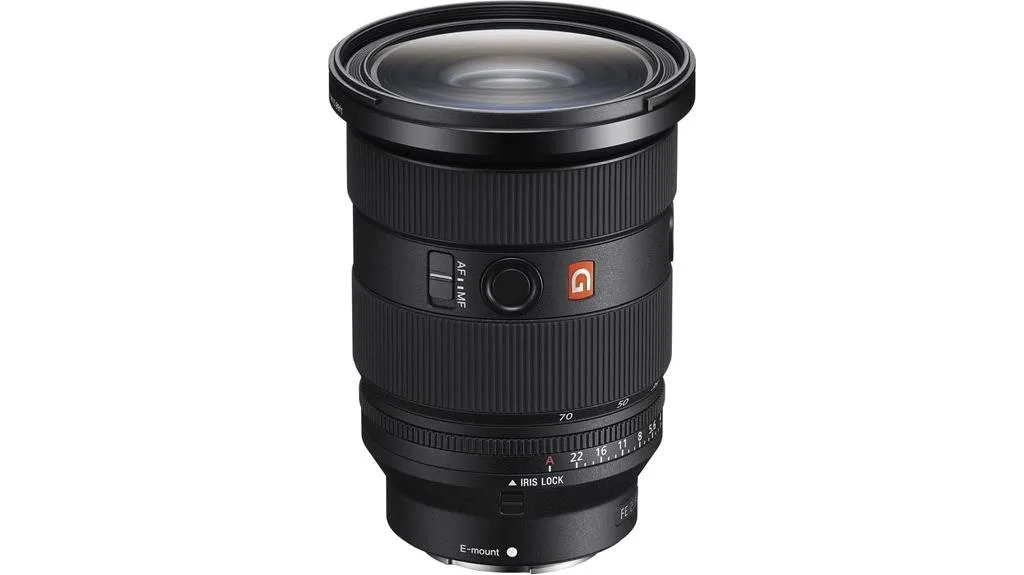
Sony FE 24-70mm F2.8 GM II — Best Premium Zoom

If there’s one lens that belongs on every FX30 owner’s shortlist regardless of shooting style, it’s the Sony FE 24-70mm F2.8 GM II. This is the lens that does it all — narrative filmmaking, event coverage, documentary work, and commercial shoots. On the FX30’s Super 35 sensor, the 24-70mm range becomes roughly 36–105mm equivalent, which covers wide environmental shots through medium telephoto compression. The constant f/2.8 aperture means you never fumble with exposure when zooming mid-shot.
Sony’s second-generation G Master redesign is a genuine step forward. At just 695g — 20% lighter than the original — it’s noticeably more manageable on gimbals and handheld rigs. Four XD Linear Motors power the autofocus system, which is fast, silent, and reliable enough for tracking moving subjects in 4K 120p. For FX30 shooters in particular, the quiet AF is crucial: this camera has no built-in ND filters, so you’ll often be shooting wide open, and you need AF you can trust at f/2.8.
The optical formula — XA, ED, and Super ED elements — controls focus breathing and axial shift, which matters when you’re grading in post. Minimal focus breathing is a hallmark of Sony’s cinema-oriented glass, and the GM II delivers. If you’re only going to own one lens for your FX30, this is it.
Best For: Professional filmmakers and videographers who need one premium zoom that covers narrative, documentary, commercial, and event work without compromise.
Pros:
- Constant f/2.8 aperture throughout the zoom range — consistent exposure and beautiful bokeh regardless of focal length
- 20% lighter and more compact than the original GM, yet maintains full weather sealing and premium build quality
- Four XD Linear Motors deliver fast, silent AF that’s reliable for 4K 120p and tracking moving subjects
- Minimal focus breathing — optimized for video use, which matters during post color work
Cons:
- Premium price point (~$2,299) — a significant investment, though third-party alternatives at this level don’t quite match it
- On FX30, the 36–105mm equivalent range skews toward standard-telephoto; you’ll likely want a separate wide lens for environmental shots
- Extends noticeably during zoom, which some find less ideal for certain rig configurations
Sigma 12mm f/1.4 DC DN Contemporary — Best Ultra-Wide Prime for Video

Released in August 2025, the Sigma 12mm f/1.4 DC DN | Contemporary is genuinely unprecedented: the first-ever f/1.4 ultra-wide prime designed specifically for APS-C mirrorless. On the FX30’s Super 35 sensor, the 12mm focal length gives you an approximately 18mm full-frame equivalent field of view — wide enough for dramatic environmental shots, interiors, and establishing sequences, yet controlled enough to keep verticals stable for architectural and real-estate work.
At just 225 grams (about 8 ounces), this lens barely registers on your gimbal or handheld rig. Despite its compact weight, Sigma built it with a functional aperture ring and weather-sealed construction with rubber gaskets around the lens mount. PetaPixel called it “an absolute gem” and TechRadar praised it as a “perfectly portable prime” — and those assessments hold up. At f/1.4, you’re getting meaningful low-light headroom that was previously unavailable in a native APS-C ultra-wide for E-mount.
For FX30 filmmakers, this lens hits a different use case than the Sony FE 16mm f/1.8 G below: the Sigma is APS-C native (meaning it’s designed for your sensor size — lighter, smaller, optimized), and at a full stop faster in aperture, it’s the better choice if maximum low-light performance in a wide-angle prime is your priority. The Sony 16mm wins on Sony’s own autofocus integration and builds to FE full-frame spec. For documentary, vlogging, and environmental video work, the Sigma is hard to beat at $579.
Best For: Documentary filmmakers, vloggers, and solo shooters who want the widest possible APS-C prime with fast aperture for low-light environments and dramatic wide shots.
Pros:
- World’s first f/1.4 ultra-wide prime for APS-C mirrorless — unmatched low-light performance in this focal length for Sony E-mount
- Extremely lightweight at 225g — one of the lightest lenses in its class, ideal for gimbal and run-and-gun setups
- APS-C native design means no crop penalty — optimized for the FX30’s Super 35 sensor with no wasted coverage
- Weather-sealed construction and functional aperture ring — built for real-world filmmaking, not just studio use
Cons:
- No optical image stabilization — the FX30 also lacks IBIS, so handheld use at slower shutter speeds requires care or a gimbal
- At 18mm equivalent, it’s wide but not ultra-ultra-wide — filmmakers needing 14mm or 12mm full-frame equivalent should look elsewhere
- Relatively new lens (late 2025), so long-term reliability data is still accumulating
Sigma 18-50mm f/2.8 DC DN — Best All-Around Zoom for Most Filmmakers

If you’re looking for the best bang-for-your-dollar zoom lens for the Sony FX30, the Sigma 18-50mm f/2.8 DC DN | Contemporary is the answer that keeps coming up in filmmaker communities — and for good reason. This APS-C native zoom covers 27–75mm full-frame equivalent on the FX30, which is essentially the “one lens” range for most narrative and documentary work. It’s wide enough for environmental shots at 18mm, hits a natural 45mm equivalent in the middle, and reaches a useful telephoto 75mm equivalent at the long end.
What makes this lens remarkable is the combination of constant f/2.8 aperture, compact size, and a price point around $499. The Sony 16-55mm f/2.8 G does a similar job but costs roughly twice as much and weighs significantly more. The Sigma is the lens that FX30 owners on YouTube and Reddit consistently recommend to newcomers asking what zoom to pair with their camera — and it’s been conspicuously absent from this guide until now.
Autofocus performance is fast and reliable for video work. The Sigma’s stepping motor AF integrates well with Sony’s phase-detection system, and the lens renders cleanly across its range. At f/2.8, you get a useful separation between subject and background — not the dramatic bokeh of a fast prime, but enough for polished, professional-looking footage. This is the lens to grab if you want one versatile APS-C zoom that handles 80% of your shooting situations without breaking the bank or your back.
Best For: FX30 owners who want one compact, fast-aperture zoom that covers wide-to-short-telephoto without the size, weight, or cost of Sony’s own f/2.8 zoom options.
Pros:
- Constant f/2.8 throughout the 18-50mm range — consistent exposure during zoom moves, essential for professional video work
- APS-C native and compact — significantly smaller and lighter than full-frame f/2.8 zooms, ideal for FX30’s form factor
- Excellent price-to-performance ratio at ~$499 — widely regarded as the best value APS-C zoom for Sony E-mount video
- Fast, quiet stepping motor AF that integrates reliably with Sony’s phase-detection system
Cons:
- No optical stabilization — combined with the FX30’s lack of IBIS, handheld shooting benefits from a gimbal
- 50mm long end (75mm equivalent) may feel limiting for filmmakers who need telephoto reach — the SELP18105G covers more range
- Build quality is good but not weather-sealed, which can be limiting for outdoor shoots in variable conditions
Tamron 11-20mm f/2.8 Di III-A RXD — Best Wide Zoom for Documentary and Event Filmmakers

The Tamron 11-20mm f/2.8 Di III-A RXD occupies a unique position in the FX30 lens ecosystem: it’s the only constant-f/2.8 ultra-wide zoom available for APS-C E-mount cameras. On the FX30, its range covers 16.5–30mm full-frame equivalent — exactly where documentary and event filmmakers live when they need to capture tight spaces, crowd reactions, or interior establishing shots with a fast aperture.
At around $659 (down considerably from its ~$830 launch price), the Tamron offers a compelling alternative to reaching for a wide prime when you need zoom flexibility. The RXD (Rapid eXtra-silent stepping Drive) motor system delivers fast, near-silent autofocus that integrates well with Sony’s phase-detection AF. The lens is compact and weather-resistant, making it a practical choice for outdoor event and documentary work where conditions aren’t always controlled.
Where this lens shines is in scenarios where you simply can’t swap to a different focal length — weddings, press events, sporting events, run-and-gun documentary. Having f/2.8 throughout a wide zoom range means you can push shutter speed down for shallow depth of field or let in enough light in dim venues without reaching for your ISO ceiling. On the FX30’s Super 35 sensor with its strong high-ISO performance, pairing this lens with dual native ISO gives you a remarkably capable package for low-light wide shooting.
Best For: Event videographers, documentary filmmakers, and wedding cinematographers who need fast-aperture wide zoom coverage and can’t afford to stop and swap lenses during critical moments.
Pros:
- Only constant f/2.8 ultra-wide zoom for APS-C E-mount — no direct competitor at this combination of focal range and aperture
- 16.5–30mm equivalent range covers wide environmental to normal, the most-used documentary focal lengths
- Weather-resistant construction — can handle light rain and dust, practical for outdoor event and run-and-gun work
- Compact and well-balanced on the FX30 body
Cons:
- No optical stabilization — the FX30 has no IBIS, so a gimbal is recommended for smooth handheld use
- The 20mm long end (30mm equivalent) may feel limiting if you also need normal focal length coverage — consider pairing with the Sigma 18-50mm for a two-lens kit
- At $659, it’s priced between budget APS-C options and premium glass — some filmmakers opt for the Sigma 12mm prime instead at a lower price point
Viltrox AF 56mm f/1.2 Pro — Best Portrait and Telephoto Prime

Released in September 2025, the Viltrox AF 56mm f/1.2 Pro immediately became the standout telephoto prime for FX30 filmmakers. At 56mm on the FX30’s Super 35 sensor, you get approximately 84mm full-frame equivalent — a classic portrait focal length with flattering compression. But the f/1.2 maximum aperture is what separates this from everything else in its price class. This is, at time of writing, the fastest APS-C portrait prime available for Sony E-mount.
Viltrox built this lens around their patented “HyperVCM” (Voice Coil Motor) autofocus system, which delivers fast, near-silent focusing that’s specifically optimized for video use. On the FX30 — a camera without IBIS — the silent AF matters enormously for in-camera audio. The de-clickable aperture ring is another critical video feature: it lets you perform smooth, stepless iris pulls without clicks or jumps appearing in your footage, which is essential for creative exposure transitions during takes.
The optical formula uses 13 elements in 8 groups including high-refractive index glass, an extra-low dispersion element, and an ultra-large aspherical lens. The 11-bladed aperture diaphragm produces circular, smooth bokeh without the onion-ring artifacts that plague cheaper fast primes. Weather-sealed aluminum alloy construction rounds out a lens that punches well above its $580 price point. This is the new go-to telephoto prime for FX30 — it displaces the older Sigma 56mm f/1.4 as the recommendation in this focal length class.
Best For: Portrait, interview, and narrative filmmakers who need maximum background separation and low-light telephoto performance in an APS-C prime optimized for video.
Pros:
- f/1.2 maximum aperture — the fastest APS-C telephoto prime for Sony E-mount, exceptional background separation and low-light capability
- HyperVCM autofocus is fast and near-silent — critical for video use where AF motor noise bleeds into in-camera audio
- De-clickable aperture ring allows smooth, stepless iris pulls for creative exposure changes during shots
- 11-bladed aperture produces smooth, circular bokeh — the optical rendering is well above the budget-lens tier
- Weather-sealed forged aluminum build at $580 — strong value proposition for the build and optical quality delivered
Cons:
- At 570g, it’s the heaviest APS-C prime in this guide — noticeable on extended gimbal sessions
- Minimum focus distance of 0.5m (1.64 ft) limits close-up work compared to shorter focal length lenses
- f/1.2 at 84mm equivalent produces very shallow depth of field — precise focus control is needed, especially for moving subjects
Sony FE 16mm f/1.8 G — Best Ultra-Wide Prime for Sony Integration

Announced in February 2025 and shipping since April 2025, the Sony FE 16mm f/1.8 G has been available for nearly a year at around $899 — a compelling ultra-wide prime that brings Sony’s own engineering to the wide end of the FX30’s focal length range. On the Super 35 sensor, 16mm full-frame gives you approximately a 24mm equivalent field of view: wide, dramatic, and ideal for astrophotography, architecture, environmental portraits, and sweeping landscape sequences.
At just 304g, this lens is notable for what you get in such a small package. Two XD Linear Motors power the autofocus system — the same technology Sony uses in its G Master lineup — delivering the kind of fast, silent, and precise focusing that FX30 filmmakers need. The 0.15m minimum focus distance in AF mode (0.13m in manual focus) opens up creative close-up possibilities that most ultra-wide primes don’t offer.
Being a full-frame FE lens, it covers the entire FX30 sensor without any compromise — no vignetting, no edge softness from an undersized image circle. The f/1.8 aperture is one stop wider than most ultra-wide primes in this focal length range, giving you meaningful low-light advantage over f/2.8 alternatives. Two AA (advanced aspherical) elements control distortion across what is otherwise a geometrically challenging focal length. For filmmakers who prioritize Sony’s native autofocus ecosystem and maximum optical compatibility, this is the ultra-wide prime to reach for.
Best For: Filmmakers and astrophotographers who want Sony’s native ultra-wide prime with seamless autofocus integration, low-light capability at f/1.8, and extreme close-focus performance.
Pros:
- f/1.8 aperture in a 16mm full-frame prime — meaningful low-light advantage over f/2.8 ultra-wide alternatives
- XD Linear Motor AF — Sony’s own fast, silent autofocus technology, seamlessly integrated with FX30 AF-C tracking
- Extremely close minimum focus distance (0.15m AF / 0.13m MF) — enables creative ultra-wide close-up photography and video
- Lightweight at 304g — well-balanced on gimbal and handheld rigs
- Full-frame FE lens provides complete sensor coverage with no compromise on the FX30
Cons:
- At ~$899, it’s priced above the Sigma 12mm f/1.4 DC DN (~$579) which is faster and APS-C native — value comparison favors the Sigma for pure video use
- 67mm filter thread may require new filters for photographers with existing filter collections
- No OSS (optical image stabilization) — like most ultra-wide primes; use a gimbal or rely on Sony’s Active SteadyShot for handheld use
Sony FE PZ 16-35mm f/4 G — Best Power Zoom for Gimbal and Solo Shooter Work

The Sony FE PZ 16-35mm f/4 G (SELP1635G) is a lens built specifically for the video workflow — and with the FX30’s firmware v6.0 enabling BRAW recording and more sophisticated rig setups, it’s more relevant than ever. The “PZ” stands for Power Zoom: motorized zoom control driven by four XD Linear Motors that enable smooth, precise, variable-speed zoom pulls that are simply impossible to execute consistently by hand. On the FX30, the 16-35mm range crops to approximately 24–52mm full-frame equivalent, covering wide environmental to normal focal lengths.
What makes this lens valuable for FX30 filmmakers specifically is its gimbal integration. The power zoom can be operated remotely using Sony’s grip controllers, meaning you can execute smooth zoom changes on a gimbal without touching the lens. For solo operators running a gimbal rig — which describes a large percentage of FX30 users — this is a genuinely useful capability that a conventional zoom can’t replicate. The zoom lever on the barrel allows continuously variable speed control, from imperceptibly slow pulls to fast repositioning.
At f/4, it’s not a low-light workhorse. But on the FX30’s excellent high-ISO sensor with dual native ISO, f/4 is far less limiting than it would be on an older camera body. Priced around $1,098, the SELP1635G is a specialist lens — you buy it because you need motorized zoom control and gimbal integration, not as an all-purpose wide zoom. If that’s your workflow, there’s nothing else like it in E-mount at this price.
Best For: Solo operators, gimbal users, and video-first shooters who need precise motorized zoom control for smooth zoom pulls and remote operation on stabilized rigs.
Pros:
- Power zoom with variable-speed zoom lever — enables smooth, consistent zoom pulls impossible to execute by hand
- Remote zoom control compatible with Sony grip controllers — ideal for gimbal operation without touching the lens
- Lightweight and well-balanced — designed for video ergonomics on stabilized rigs
- Constant f/4 aperture — consistent exposure throughout the zoom range
- Full-frame FE coverage — no sensor coverage compromise on the FX30
Cons:
- f/4 maximum aperture — not ideal for low-light without raising ISO; pair with FX30’s excellent high-ISO performance to compensate
- On FX30, the range crops to ~24–52mm equivalent — narrower than the label suggests; wider subjects may require a different lens
- At ~$1,098, it’s a specialist purchase that makes sense primarily for gimbal-focused workflows
Sony SELP18105G E PZ 18-105mm f/4 G OSS — Best Documentary Zoom

The Sony SELP18105G E PZ 18-105mm f/4 G OSS has been a stalwart recommendation for FX30 and other Sony APS-C video cameras for years, and it remains a legitimate choice for filmmakers who prioritize coverage over aperture. On the FX30, its range translates to an impressive 27–158mm full-frame equivalent — a staggering 5.8x zoom ratio that covers wide environmental shots through telephoto compression in a single lens. That kind of coverage makes it nearly irreplaceable for documentary, corporate, and event work where changing lenses isn’t practical.
Like the SELP1635G above, this lens uses power zoom via a dedicated zoom lever, making smooth, motorized zoom pulls possible without a mechanical zoom ring. The built-in OSS (Optical SteadyShot) is a significant advantage for FX30 users, since this camera has no in-body stabilization. For handheld documentary and solo-operator work, OSS is a meaningful practical benefit that reduces the need for a gimbal in many situations.
The constant f/4 aperture is the main limitation. In controlled lighting, it produces clean, sharp footage across the entire zoom range — image quality that rivals prime lenses in good light, as many users note. In dimmer conditions, you’ll be pushing ISO faster than with an f/2.8 or faster lens. The FX30’s dual native ISO helps offset this somewhat, but it remains the primary tradeoff of this lens’s versatility. For run-and-gun shooters and documentary filmmakers who need to cover ground fast, the SELP18105G remains one of the most practical lenses in the E-mount lineup.
Best For: Documentary filmmakers, event videographers, and solo operators who need wide-to-telephoto zoom coverage in a single power-zoom lens with built-in stabilization.
Pros:
- Exceptional zoom range: 27–158mm full-frame equivalent on FX30 — wide environmental through telephoto in one lens
- Power zoom lever enables smooth, motorized zoom pulls — essential for professional video work
- Built-in OSS stabilization — particularly valuable on the FX30 which has no IBIS
- Constant f/4 aperture throughout the range — consistent exposure during zoom moves
Cons:
- f/4 maximum aperture limits low-light performance compared to f/2.8 zoom alternatives
- Bulkier and heavier than APS-C prime lenses — less ideal for compact, minimal rigs
- Some users report slightly slower autofocus compared to other E-mount lenses in continuous AF modes
Viltrox FE 20mm f/2.8 — Best Budget Ultra-Wide

For FX30 owners who want an ultra-wide angle option without spending $579–$899 on a prime, the Viltrox FE 20mm f/2.8 consistently delivers more than its price tag suggests. At roughly $249, it’s the most affordable quality ultra-wide in this guide — and at 157 grams, it’s also the lightest. On the FX30’s Super 35 sensor, the full-frame 20mm gives you approximately a 30mm equivalent field of view: slightly wider than standard, useful for vlogging, real estate, interiors, and environmental B-roll that needs some breathing room without going full ultra-wide.
The 10-element, 8-group optical design delivers solid sharpness in the center frame. Viltrox’s autofocus is fast and silent for vlogging and run-and-gun use, and the 0.19m minimum focus distance enables surprisingly creative close-up possibilities for such a wide lens. FX30 filmmakers in online communities consistently praise it as a capable budget option for beginner and intermediate shooters who want to try a wider focal length before committing to a premium lens.
The tradeoffs are real: corner vignetting at wider apertures is noticeable, edge sharpness trails off compared to premium options, and weather sealing is limited compared to Sony’s first-party glass. These are acceptable compromises at this price point for casual and semi-professional use. If you’re just building out your FX30 lens collection and need an affordable wide option to complement a standard zoom, the Viltrox 20mm f/2.8 gets the job done.
Best For: Budget-conscious FX30 owners, beginners building their first lens kit, vloggers, and real-estate videographers who want a compact ultra-wide option without a premium investment.
Pros:
- Exceptional value at ~$249 — the most affordable quality ultra-wide prime for E-mount
- Featherlight at 157g — barely registers on the camera body or gimbal
- Fast and silent AF — well-suited for vlogging and solo-operator shooting
- Full-frame coverage — no vignetting from sensor coverage limitations on the FX30
Cons:
- Noticeable vignetting in corners, particularly wide open — improves when stopped down to f/4 or smaller
- Edge sharpness lags behind premium ultra-wide primes — center sharpness is solid, edges are softer
- Limited weather sealing compared to Sony first-party lenses
- 30mm equivalent field of view on FX30 is moderate-wide rather than truly ultra-wide
Anamorphic Lenses for Sony FX30 (Firmware v6.0 De-Squeeze Support)

Sony’s firmware v6.0 update (September 2025) transformed the FX30 into a legitimate anamorphic filmmaking platform. The update added native 1.5x and 1.6x de-squeeze display options, meaning the camera can unsqueeze the anamorphic image in real-time on both the monitor and HDMI output. You see a correctly proportioned image while shooting — no more guessing at framing through a squeezed viewfinder.
For those unfamiliar: anamorphic lenses use an optical element to “squeeze” a wider field of view horizontally onto your sensor. A 1.5x anamorphic lens captures 50% more horizontal information than a spherical lens at the same focal length, which you then “de-squeeze” in post (or now, natively in-camera) to get the wide cinematic aspect ratio. The result is the distinctive anamorphic look: oval bokeh, horizontal lens flares, and a widescreen feel that’s difficult to replicate with spherical glass.
Recommended Anamorphic Lenses for FX30
Blazar Remus-M 1.5x Anamorphic Series (~$1,200–$2,200 per lens)
The Blazar Remus-M is the anamorphic set most FX30 filmmakers gravitate toward at an accessible price point. Available in 33mm, 50mm, 85mm, and 100mm focal lengths, all with a 1.5x squeeze ratio that matches the FX30’s v6.0 de-squeeze support perfectly. The Remus-M was specifically designed for mirrorless cameras with native Sony E-mount and features T1.8–T2.8 apertures, silver lens flares, and oval bokeh that give footage that unmistakable cinematic character. These are manual focus cine-style lenses — not autofocus — so plan your workflow accordingly.
Blazar APEX Autofocus Anamorphic (1.33x, ~$800–$1,000 per lens)
Blazar’s APEX series offers the first autofocus anamorphic lenses for Sony E-mount, though with a 1.33x squeeze ratio rather than 1.5x. Note that 1.33x de-squeeze is not natively supported in FX30 firmware v6.0 (which covers 1.5x and 1.6x only) — you’ll need to de-squeeze in post. However, the AF capability makes these significantly more practical for run-and-gun anamorphic work. Available in 35mm and 50mm. Worth considering if your workflow demands autofocus over native de-squeeze support.
A Note on Squeeze Ratios:
The FX30’s native de-squeeze options are 1.5x and 1.6x. Pair your lens selection accordingly. 1.5x anamorphic lenses (like the Blazar Remus) are a natural fit. Some filmmakers also achieve interesting results by using 1.33x lenses and adjusting aspect ratios in post, but you lose the in-camera monitoring benefit of native de-squeeze.
Best Budget Lenses for Sony FX30 (Under $300)
Not every FX30 filmmaker needs to spend $500+ on a lens. These three options deliver solid results for shooters who are building their first kit or filling a specific focal length gap on a tight budget.
Sigma 30mm f/1.4 DC DN | Contemporary (~$259)
A classic recommendation for APS-C Sony cameras. The 30mm gives approximately 45mm full-frame equivalent on the FX30 — a natural “eye-level” focal length that’s arguably the most versatile single prime you can own. The f/1.4 aperture is genuinely useful for low-light separation. Fast stepping motor AF, solid build quality, and a track record of reliability across years of use make this a recommended starting prime for FX30 owners. You’ll find it bundled with FX30 kits for good reason.
Sony E 50mm f/1.8 OSS (~$248)
On the FX30, 50mm becomes approximately 75mm equivalent — a short telephoto portrait focal length. The built-in OSS is a notable advantage for FX30 users given the camera’s lack of IBIS. At under $250, this is one of the few budget options with optical stabilization. Image quality is consistent and reliable for both video and stills. A useful second prime to pair with the Sigma 30mm for a compact two-lens kit.
Sigma 56mm f/1.4 DC DN | Contemporary (~$299)
If the Viltrox 56mm f/1.2 Pro is outside your budget, the Sigma 56mm f/1.4 is a well-regarded alternative at $300. The f/1.4 aperture delivers beautiful background separation at the 84mm equivalent focal length, and the Sigma’s optical quality consistently earns high marks from reviewers. The AF is slightly slower than the Viltrox’s HyperVCM system, but for portrait and interview work where subjects aren’t moving at speed, it’s entirely capable.
Factors to Consider When Choosing Lenses for Sony FX30
The FX30 has specific characteristics that should directly influence your lens choices. This isn’t just a mirrorless camera — it’s a cinema-oriented body with a Super 35 sensor, no built-in ND filters, no IBIS, and a video-first design philosophy. Understanding these specifics will help you make better purchasing decisions.
Lens Mount Compatibility: APS-C vs Full-Frame Lenses on FX30
The FX30 uses Sony’s E-mount, which accepts two categories of native lenses: E lenses (APS-C native) and FE lenses (full-frame). Both work on the FX30 without any adapter. Here’s the practical difference:
APS-C (E) lenses are designed specifically for your sensor size. They’re typically smaller, lighter, and cheaper because the image circle only needs to cover the APS-C sensor. Examples: Sigma 18-50mm f/2.8 DC DN, Sigma 12mm f/1.4 DC DN, Viltrox 56mm f/1.2 Pro. On the FX30, these are usually the better value choice for dedicated video use.
Full-frame (FE) lenses project a larger image circle that covers full-frame sensors. They generally cost more and weigh more, but may offer optical advantages, greater resale flexibility, and better integration with Sony’s own autofocus system. Examples: Sony FE 24-70mm GM II, Sony FE 16mm f/1.8 G, Sony FE PZ 16-35mm f/4 G. If you also shoot on a full-frame Sony body (or plan to upgrade), FE glass is more versatile long-term.
Crop factor reminder: All focal lengths multiply by approximately 1.5x on the FX30’s Super 35 sensor. A 24mm lens becomes 36mm equivalent; a 50mm becomes 75mm; an 85mm becomes 127mm. Plan your kit with this in mind — many filmmakers are surprised how “long” their lenses feel when they first shoot on APS-C after full-frame experience.
Focal Length Selection for FX30 Filmmakers
The right focal lengths for your FX30 depend on your primary shooting scenarios. Here’s a practical framework:
For documentary and event filmmaking, a zoom that covers wide-to-normal range is essential. The Sigma 18-50mm f/2.8 (27–75mm equivalent) or Sony SELP18105G (27–158mm equivalent) cover the most common documentary focal lengths. Consider adding the Tamron 11-20mm f/2.8 if you’re frequently shooting in tight spaces or need ultra-wide coverage.
For narrative filmmaking, prime lenses allow more deliberate choices. A three-prime kit of 12mm (Sigma), 30mm (Sigma or Sony), and 56mm (Viltrox) gives you wide, standard, and portrait coverage in an APS-C-native, lightweight set that’s genuinely practical for small crew shoots.
For vlogging and solo content creation, wider lenses work better for self-shooting — 20mm and 24mm equivalent are typical sweet spots. The Viltrox 20mm f/2.8 is an affordable option; the Sony FE 16mm f/1.8 G offers superior optics at higher cost.
Aperture Requirements — The No-IBIS Reality
The FX30 has no in-body image stabilization (IBIS) — a known limitation that directly shapes which lenses make sense. Without IBIS, every stop of aperture matters more for handheld shooting: faster apertures let you use faster shutter speeds, reducing motion blur from camera shake. This makes f/1.4 and f/1.8 primes disproportionately valuable on the FX30 compared to cameras with IBIS.
For lenses with optical stabilization (OSS), the Sony SELP18105G is the standout in this guide — a meaningful advantage for documentary handheld work. The Sony E 50mm f/1.8 OSS also includes stabilization at an affordable price point.
For lenses without OSS, a gimbal or stabilized rig is the practical solution. The Sigma 18-50mm f/2.8 and Sigma 12mm f/1.4 are both non-stabilized, but their wide apertures help you maintain usable shutter speeds in motion. Plan your gimbal budget alongside your lens budget for the FX30 specifically.
Budget Considerations
FX30 owners have an extraordinary range of quality lens options across price points. A practical budget guide:
Under $300: Sigma 30mm f/1.4 DC DN (~$259), Sony E 50mm f/1.8 OSS (~$248), Viltrox FE 20mm f/2.8 (~$249). All are capable lenses that punch above their price.
$300–$700: Sigma 18-50mm f/2.8 DC DN (~$499), Sigma 12mm f/1.4 DC DN (~$579), Viltrox AF 56mm f/1.2 Pro (~$580), Tamron 11-20mm f/2.8 (~$659). This is the sweet spot for most FX30 filmmakers — strong optical quality without premium pricing.
$700–$1,500: Sony FE 16mm f/1.8 G (~$899), Sony SELP18105G (~$549), Sony FE PZ 16-35mm f/4 G (~$1,098). First-party Sony glass with superior AF integration and long-term resale value.
$2,000+: Sony FE 24-70mm GM II (~$2,299). The best zoom available for E-mount, period. Justifiable for professional productions; overkill for casual filmmakers.
Weight, Size, and Gimbal Compatibility
The FX30’s compact body pairs best with lighter lenses. If you’re shooting handheld or on a gimbal — the two primary use cases for this camera — lens weight has a direct impact on fatigue and balance.
The lightest options in this guide: Viltrox FE 20mm f/2.8 (157g), Sigma 12mm f/1.4 DC DN (225g), Sony FE 16mm f/1.8 G (304g). These pair naturally with the FX30’s form factor for extended handheld sessions.
The heavier options — Viltrox 56mm f/1.2 Pro (570g), Sony FE 24-70mm GM II (695g) — require more attention to gimbal balance and arm fatigue during long handheld sessions. Both deliver results that justify the weight for appropriate use cases.
Image Stabilization: OSS, Gimbal, or Active SteadyShot
As noted, the FX30 has no IBIS, which makes stabilization strategy an important part of your lens planning. Three options:
Optical stabilization (OSS) is built into select lenses (SELP18105G, Sony E 50mm f/1.8 OSS). This works directly and reliably without any additional equipment. For handheld documentary work, OSS lenses are the lowest-friction stabilization solution.
Sony Active SteadyShot is available in the FX30’s electronic stabilization modes. It crops the image slightly but provides useful stabilization with non-OSS lenses. Combine it with a wide lens to minimize the crop effect.
Gimbal (recommended) is the professional standard for smooth FX30 footage. A 3-axis gimbal eliminates camera shake entirely and allows creative camera movements. Most of the lenses in this guide are lightweight enough for common gimbals like the DJI RS series or Zhiyun Weebill. Budget your gimbal purchase alongside your lens budget when planning an FX30 kit.
Frequently Asked Questions
What is the best lens for the Sony FX30 for beginners?
For beginners building their first FX30 lens kit, the Sigma 18-50mm f/2.8 DC DN (~$499) is the strongest starting point. It covers the most versatile focal range (27–75mm equivalent), maintains a constant f/2.8 aperture, and costs significantly less than Sony’s equivalent. If budget is tighter, the Sigma 30mm f/1.4 DC DN (~$259) is an excellent single prime to learn filmmaking fundamentals.
Does the Sony FX30 need a speedbooster or focal reducer?
The FX30 does not require a focal reducer for standard E-mount or FE lenses — both work natively. Some filmmakers use focal reducers (speedboosters) to use older full-frame lenses from other mounts (like Canon EF) to simulate a shallower depth of field at lower cost. This is a valid workaround, but for native E-mount glass, no adapter is needed or recommended.
Does the Sony FX30 have IBIS?
No — the Sony FX30 does not have in-body image stabilization (IBIS). This is one of the key differences between the FX30 and the FX3. Prioritize lenses with OSS, use Sony’s electronic Active SteadyShot, or pair the camera with a gimbal for smooth footage. Fast apertures (f/1.4, f/1.8) help by allowing faster shutter speeds in motion.
What is the crop factor on the Sony FX30?
The Sony FX30 has a Super 35 APS-C sensor with a 1.5x crop factor. A 24mm lens becomes approximately 36mm equivalent; 50mm becomes 75mm; 85mm becomes 127mm. When evaluating focal lengths, multiply the lens’s stated focal length by 1.5 to understand the effective field of view on the FX30.
Can the Sony FX30 shoot anamorphic?
Yes — with firmware v6.0 (released September 2025), the FX30 natively supports 1.5x and 1.6x anamorphic de-squeeze display on both the monitor and HDMI output. This means you can see a correctly unsqueezed image in real-time while shooting. Pair the camera with 1.5x anamorphic lenses like the Blazar Remus-M series for a native, seamless anamorphic workflow. De-squeezing in post is always an option for other squeeze ratios.
What are the best lenses for Sony FX30 under $500?
The best options under $500: Sigma 18-50mm f/2.8 DC DN (~$499) for the best all-around zoom, Sigma 30mm f/1.4 DC DN (~$259) for the best budget prime, Sigma 56mm f/1.4 DC DN (~$299) for a budget portrait prime, Viltrox FE 20mm f/2.8 (~$249) for a budget ultra-wide, and Sony E 50mm f/1.8 OSS (~$248) for a budget stabilized prime. All deliver solid optical performance at their price points.
Conclusion
The Sony FX30 has never had a stronger lens ecosystem than it does in 2026. The additions of the Sigma 12mm f/1.4 DC DN and Viltrox AF 56mm f/1.2 Pro fill the wide and telephoto ends of the prime lineup with genuinely compelling options, while the Sigma 18-50mm f/2.8 DC DN remains the go-to all-around zoom for filmmakers who want APS-C native performance without full-frame pricing. Firmware v6.0’s anamorphic de-squeeze support opens a new creative direction that would have been impossible on this camera just one year ago.
Our top picks by use case: for the best all-around premium zoom, the Sony FE 24-70mm GM II remains unmatched. For the best value all-around zoom, the Sigma 18-50mm f/2.8 is the easy recommendation. For ultra-wide work, choose between the Sigma 12mm f/1.4 (wider and faster, APS-C native) or the Sony FE 16mm f/1.8 G (Sony’s own glass with seamless AF). For portraits and telephoto, the Viltrox 56mm f/1.2 Pro is the new benchmark. And for documentary coverage and power zoom workflows, the Sony SELP18105G continues to earn its place in FX30 bags around the world.
Remember the FX30’s fundamentals when building your kit: no IBIS means OSS lenses or a gimbal aren’t optional accessories, they’re practical necessities for smooth footage. No built-in ND means you’ll want variable NDs for outdoor shooting in bright conditions. And the Super 35 crop factor means your wide lenses need to be genuinely wide — a 35mm full-frame lens becomes a 52mm on this camera. Plan with those realities in mind, and the FX30 with the right glass is one of the most capable compact cinema cameras available at any price.
Which Sony camera fits your shooting style?
Best lenses for the Sony FX30 — frequently asked.
Pulled from the actual searches that brought you here.
What is the best lens for the Sony FX30 for beginners?
For beginners building their first FX30 lens kit, the Sigma 18-50mm f/2.8 DC DN (~$499) is the strongest starting point. It covers the most versatile focal range (27–75mm equivalent), maintains a constant f/2.8 aperture, and costs significantly less than Sony’s equivalent. If budget is tighter, the Sigma 30mm f/1.4 DC DN (~$259) is an excellent single prime to learn filmmaking fundamentals.
Does the Sony FX30 have IBIS?
No — the Sony FX30 does not have in-body image stabilization (IBIS). This is one of the key differences between the FX30 and the FX3. Prioritize lenses with OSS, use Sony’s electronic Active SteadyShot, or pair the camera with a gimbal for smooth footage. Fast apertures (f/1.4, f/1.8) help by allowing faster shutter speeds in motion.
What is the crop factor on the Sony FX30?
The Sony FX30 has a Super 35 APS-C sensor with a 1.5x crop factor. A 24mm lens becomes approximately 36mm equivalent; 50mm becomes 75mm; 85mm becomes 127mm. When evaluating focal lengths, multiply the lens’s stated focal length by 1.5 to understand the effective field of view on the FX30.
What are the best lenses for Sony FX30 under $500?
The best options under $500: the Sigma 18-50mm f/2.8 DC DN (~$499) for the best all-around zoom, the Sigma 30mm f/1.4 DC DN (~$259) for the best budget prime, the Sigma 56mm f/1.4 DC DN (~$299) for a budget portrait prime, the Viltrox FE 20mm f/2.8 (~$249) for a budget ultra-wide, and the Sony E 50mm f/1.8 OSS (~$248) for a budget stabilized prime.