Disclosure: As an Amazon Associate, Sony Camera Central earns from qualifying purchases. This post contains affiliate links — we may earn a commission at no extra cost to you.
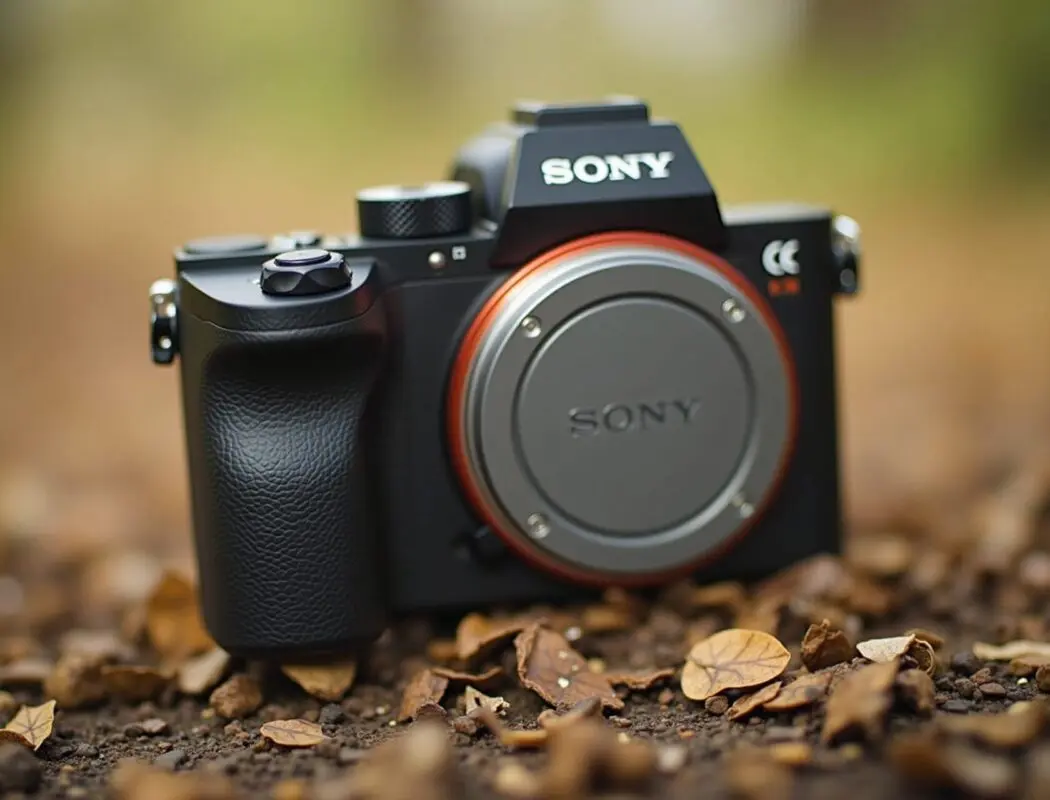
The Sony A6000 launched in 2014, yet here we are in 2026 and it’s still one of the most searched mirrorless cameras on the planet. That tells you everything you need to know about this camera’s staying power. With a 24.3MP APS-C sensor, 179 phase-detection autofocus points, and a body you can pick up used for $250–$350, the A6000 remains a genuinely excellent entry point into Sony’s E-mount ecosystem.
The good news: the E-mount lens selection has only gotten better. Third-party manufacturers like Sigma, Tamron, and Viltrox have flooded the market with affordable, high-quality glass that makes the A6000 punch well above its weight. Whether you paid $300 for a used body or already own one gathering dust in a drawer, the right lens transforms what this camera can do.
This guide focuses on value. These picks are chosen specifically for A6000 users who want the best image quality per dollar — no $2,000 zooms, no aspirational glass. Just the lenses that make the most sense for the camera you actually have.
Quick Picks: Best Sony A6000 Lenses at a Glance
| Lens | Best For | Approx. Price | Key Strength |
|---|---|---|---|
| Sigma 18-50mm f/2.8 DC DN | Best All-Around | ~$499 | Constant f/2.8, compact |
| Sigma 30mm f/1.4 DC DN | Best Portrait Prime | ~$339 | Low-light king, sharp at f/1.4 |
| Sony E PZ 16-50mm OSS | Best Kit Lens Upgrade | ~$248 | Native, stabilized, pancake size |
| Tamron 17-70mm f/2.8 VC RXD | Best Premium Zoom | ~$749 | Widest constant-aperture zoom range |
| Sony 35mm f/1.8 OSS | Best Street/Everyday | ~$448 | Native AF, fast, stabilized |
| Tamron 70-300mm f/4.5-6.3 RXD | Best Telephoto | ~$549 | Lightweight, 6-year warranty |
| Viltrox 20mm f/2.8 AF | Best Wide Angle | ~$149 | Ultra-budget, 157g, sharp |
| Sony E 55-210mm f/4.5-6.3 OSS | Best Budget Telephoto | ~$298 | Stabilized, native Sony |
1. Sigma 18-50mm f/2.8 DC DN — Best All-Around Lens for the A6000
If you can only buy one lens for your A6000 and you want the best possible all-around performer, stop here. The Sigma 18-50mm f/2.8 DC DN delivers a constant f/2.8 aperture across its entire zoom range in a package that weighs just 290g. For an A6000 user, this is transformative.
On the A6000’s APS-C sensor, the 18-50mm range translates to 27-75mm equivalent — that’s a near-perfect everyday focal range covering wide-angle street scenes through short telephoto portraits. The constant f/2.8 means you’re not losing light at the long end, a constant frustration with kit zooms like the 16-50mm OSS.
Autofocus is fast and near-silent using Sigma’s stepping motor, making it equally capable for stills and video. Sharpness is outstanding from f/2.8 onward, with beautiful subject separation at the tele end. The build is premium — metal mount, weather-sealing on the barrel, and a compact profile that doesn’t unbalance the A6000’s small body.
Best For: Travel photography, family and lifestyle shooting, vlogging, anyone who wants one lens that handles everything without compromise.
Pros:
- Constant f/2.8 across the full zoom range — rare at this price point
- Excellent sharpness from wide open, virtually no hunting in autofocus
- Compact and lightweight at 290g, balances well on the A6000 body
Cons:
- No image stabilization — the A6000 has no IBIS, so keep shutter speeds up in low light
- At f/2.8, not as fast as a dedicated prime for available-light work
- Zoom range tops out at 75mm equivalent; you’ll want a telephoto for reach
2. Sigma 30mm f/1.4 DC DN Contemporary — Best Portrait Lens
The Sigma 30mm f/1.4 DC DN is one of the most recommended lenses across all Sony APS-C forums and buying guides, and for good reason. At $339, it delivers optical performance that rivals lenses costing twice as much, with an f/1.4 aperture that gives you genuine low-light capability and subject separation that kit zooms simply cannot match.
On the A6000, 30mm translates to a 45mm equivalent — essentially a classic “normal” focal length that works for portraits, street photography, indoor events, and everyday life. The f/1.4 aperture renders backgrounds into creamy blur at close distances while keeping the subject tack-sharp.
Build quality is exceptional for the price. The lens is made in Japan with Sigma’s thorough quality control process, and the stepping motor autofocus is fast and reliable on the A6000. This is the first prime lens most A6000 owners should add to their kit.
Best For: Portraits, indoor events, street photography, anyone wanting their first fast prime at a reasonable price.
Pros:
- Exceptional sharpness at f/1.4, with beautiful bokeh quality for portraiture
- Fast stepping motor AF performs well on the A6000’s phase-detection system
- Premium Japanese build quality in a compact, 265g package
Cons:
- No image stabilization; the wide aperture compensates, but be mindful of shutter speed
- Minor vignetting at f/1.4 that clears by f/2
- Fixed focal length — not for those who need flexibility in framing
3. Sony E PZ 16-50mm f/3.5-5.6 OSS — Best Everyday Kit Zoom
If you bought your A6000 as a body-only and need a versatile everyday zoom that won’t break the bank, the Sony E PZ 16-50mm OSS is the obvious starting point. This is the lens that ships with most A6000 kit bundles, and it’s underrated precisely because it came in the box — many people assume it’s mediocre just because it’s a kit lens.
It isn’t. For everyday shooting — travel, family photos, casual street work — this lens delivers very capable results. The retractable pancake design collapses to just 29mm deep when off, making the A6000 genuinely pocketable. Built-in Optical SteadyShot provides meaningful stabilization, which matters a lot on the A6000 since the body has no IBIS.
The power zoom mechanism is smooth and precise for video, making this a solid vlogging companion. The 16-50mm range (24-75mm equivalent) covers most everyday situations, though you’ll eventually want a faster prime for low light and a telephoto for reach.
Best For: Travel, everyday photography, vlogging, and anyone who wants a compact, stabilized zoom as a starting point.
Pros:
- Extremely compact retractable design — makes the A6000 genuinely pocketable
- Built-in OSS stabilization is valuable given the A6000 has no IBIS
- Native Sony lens with full AF compatibility and smooth power zoom for video
Cons:
- Variable aperture (f/3.5-5.6) limits low-light performance significantly at the long end
- Audible zoom motor noise can be picked up on camera microphone during video
- Optical quality doesn’t match premium third-party zooms — expect some distortion and corner softness
4. Tamron 17-70mm f/2.8 Di III-A VC RXD — Best Premium Zoom
If you’re serious about photography and willing to spend more on a single lens that does everything exceptionally well, the Tamron 17-70mm f/2.8 is the answer. This is widely considered the best all-around lens for Sony APS-C cameras full stop — it offers a constant f/2.8 aperture across a wider zoom range than the Sigma 18-50mm, with the added benefit of Tamron’s Vibration Compensation stabilization system.
On the A6000, the 17-70mm range gives you 25.5-105mm equivalent — that’s a genuinely useful telephoto reach alongside the wide end, all at f/2.8. Paired with VC stabilization, this lens is remarkably capable in low light despite the A6000 lacking IBIS. Image quality is superb throughout the zoom range with minimal distortion and excellent corner sharpness.
It’s heavier than the Sigma 18-50mm at 525g, and it costs roughly $750 new. But for photographers who want a single lens that can handle weddings, events, travel, street, and portraits without switching glass, nothing matches it in the APS-C zoom category.
Best For: Serious photographers who want one premium zoom that handles any situation, including event and wedding work.
Pros:
- Constant f/2.8 across an impressive 25.5-105mm equivalent range — the widest in its class
- Built-in Vibration Compensation compensates for the A6000’s lack of IBIS
- Exceptional optical quality with superb sharpness and minimal distortion throughout
Cons:
- At 525g, significantly heavier than comparable APS-C zooms — the A6000 body feels slightly unbalanced
- Premium pricing around $749 — a significant investment relative to the camera body cost
- Larger physical profile than APS-C-optimized options
5. Sony 35mm f/1.8 OSS — Best Street and Everyday Prime
The Sony 35mm f/1.8 OSS is the native Sony prime that pairs best with the A6000 for everyday carry. On the APS-C sensor, 35mm becomes a 52.5mm equivalent — very close to the classic 50mm “nifty fifty” field of view that generations of photographers have used as their go-to focal length.
What sets this lens apart from third-party alternatives is the combination of native Sony autofocus performance, built-in Optical SteadyShot stabilization, and a very compact form factor. The AF is snappy and reliable, the OSS provides meaningful stabilization for handheld shooting at lower shutter speeds, and the overall rendering is sharp and pleasing.
At f/1.8, you get genuine background separation and excellent low-light capability. This is the lens to recommend for A6000 owners who shoot a lot of indoor events, street photography, or documentary-style work where you need one reliable prime that works in any light.
Best For: Street photography, indoor events, documentary shooting, travel with minimal gear.
Pros:
- Native Sony lens with full AF integration — fastest and most reliable autofocus of any 35mm option
- Built-in OSS stabilization is a genuine advantage on the A6000’s non-stabilized body
- Compact and lightweight at 154g, perfectly balanced on the A6000
Cons:
- At $448, more expensive than third-party equivalents with similar optical performance
- Not as fast as f/1.4 options for extreme low-light situations
- Bokeh rendering is pleasant but not as dramatic as longer portrait primes
6. Tamron 70-300mm f/4.5-6.3 Di III RXD — Best Telephoto
Wildlife photographers and sports shooters working with an A6000 budget need the Tamron 70-300mm f/4.5-6.3. On the A6000’s APS-C sensor, this delivers a 105-450mm equivalent reach — extraordinary range in a package that weighs just 545g and feels comfortable to handhold during long sessions.
Tamron’s RXD autofocus motor is notably fast and silent, handling moving subjects with precision that rivals native Sony telephoto options costing significantly more. The lens focuses down to just 31.5cm at the wide end and 59.1cm at full telephoto, giving it useful close-focus capability unusual for a telephoto zoom.
Build quality is excellent with moisture-resistant construction, and Tamron backs it with a 6-year warranty — a clear indicator of confidence in long-term durability. At $549, this is the definitive telephoto recommendation for A6000 users who want reach without spending native Sony money.
Best For: Wildlife, birds, sports, outdoor events, any situation requiring substantial telephoto reach.
Pros:
- 105-450mm equivalent reach in a lightweight 545g package — excellent for extended shooting sessions
- Fast, precise, and silent RXD autofocus handles moving subjects reliably
- Impressive close-focus capability and moisture-resistant construction with Tamron’s 6-year warranty
Cons:
Our Comparing Sigma and Sony Lenses: Which One Suits Your Photography Style? complements the information covered here.
- No built-in image stabilization — crucial to maintain high shutter speeds, especially at long focal lengths
- Variable aperture (f/4.5-6.3) limits performance in lower light conditions at telephoto
- No lens lock switch means the lens can extend during transport
Also worth considering: The Sony E 70-350mm f/4.5-6.3 G OSS (~$898) is an excellent native telephoto for A6000 users who want premium Sony G-series optical quality with built-in OSS stabilization. It delivers a 105-525mm equivalent reach — even longer than the Tamron — with sharper optics at the long end, reliable native autofocus, and weather-sealed construction. At nearly double the Tamron’s price, it’s a serious investment, but the optical performance and stabilization make it the best telephoto you can mount on an A6000 if your budget allows.
7. Viltrox 20mm f/2.8 AF — Best Budget Wide Angle
At $149, the Viltrox 20mm f/2.8 AF is the best budget wide-angle option for A6000 users who want environmental portraits, architecture, landscapes, or interior shooting without spending Sony or Sigma money. This lens weighs just 157g and fits in a jacket pocket alongside your A6000 body.
On the A6000’s APS-C sensor, 20mm gives you a 30mm equivalent field of view — wide enough to show context and environment without the extreme distortion of ultra-wides. The f/2.8 aperture is solid for this focal length, and Viltrox’s AF stepping motor delivers near-silent, responsive autofocus.
Optically, the 10-element design with ED and aspherical elements delivers impressive sharpness for the price. Expect some corner vignetting at f/2.8 that clears by f/4, and the usual minor barrel distortion easily corrected in Lightroom or in-camera. For the price, the value is exceptional.
Best For: Landscape, architecture, street photography with environmental context, travel photographers on a tight budget.
Pros:
- Extremely lightweight at 157g — barely noticeable addition to a travel camera bag
- Budget-friendly at ~$149 while delivering genuinely usable optical performance
- Near-silent stepping motor AF and 0.19m minimum focus distance for creative versatility
Cons:
- Vignetting and barrel distortion at f/2.8 require correction in post-processing
- f/2.8 is the maximum aperture — not as fast as Viltrox’s f/1.4 prime options
- Build quality and warranty support trail behind Sony and Sigma equivalents
8. Sony E 55-210mm f/4.5-6.3 OSS — Best Budget Telephoto
The Sony E 55-210mm f/4.5-6.3 OSS is the go-to budget telephoto for A6000 shooters who want native Sony quality at an accessible price. This lens provides an 82.5-315mm equivalent range with built-in Optical SteadyShot stabilization — a crucial feature given the A6000 has no in-body stabilization.
At just 345g, the 55-210mm pairs naturally with the A6000’s compact body without creating front-heavy handling issues. Autofocus is reliable and native to Sony’s system, and the OSS helps compensate for camera shake at longer focal lengths. Extra-Low Dispersion glass elements minimize chromatic aberration.
Compared to the Tamron 70-300mm, this lens offers stabilization at a lower price point, though with less telephoto reach and slower autofocus performance. For A6000 users who want the best of both worlds — stabilization and premium reach — the Sony E 70-350mm f/4.5-6.3 G OSS combines G-series optics with OSS in a native telephoto package. For those keeping their lens spend under $300, the 55-210mm is the practical telephoto choice.
Best For: Casual wildlife, sports, outdoor events, and travel photographers needing affordable telephoto reach with stabilization.
Pros:
- Native Sony lens with built-in OSS stabilization — essential for handheld telephoto on the A6000
- Lightweight at 345g, balances well on the A6000 body without creating strain
- Extra-Low Dispersion elements improve sharpness and color accuracy across the zoom range
Cons:
- Variable aperture (f/4.5-6.3) limits performance in challenging light at the long end
- Autofocus speed and precision don’t match the Tamron 70-300mm for fast-moving subjects
- Sharpness drops at the extreme telephoto end compared to the Tamron alternative
Factors to Consider When Choosing Sony A6000 Lenses
The A6000’s 1.5x Crop Factor Changes Everything
The A6000 uses an APS-C sensor with a 1.5x crop factor. Every lens you attach becomes 1.5x “longer” in terms of field of view. A 30mm lens behaves like a 45mm. A 20mm behaves like a 30mm. A 70-300mm becomes 105-450mm. This is why dedicated APS-C lenses often start at 16-18mm to give you a usable wide angle — they’re compensating for the crop.
You can use Sony’s full-frame FE lenses on the A6000, but they’re heavier and larger than necessary, and your camera will crop the image regardless. Stick to E-mount APS-C lenses from Sony, Sigma, Tamron, and Viltrox for the best balance of size, weight, and value.
No In-Body Stabilization — OSS Matters
The Sony A6000 lacks in-body image stabilization (IBIS). This means optical image stabilization built into the lens (Sony calls it OSS — Optical SteadyShot) is genuinely valuable rather than just a nice-to-have. Stabilized lenses like the Sony 35mm f/1.8 OSS, Sony E PZ 16-50mm OSS, and Sony E 55-210mm OSS become noticeably better performers on the A6000 compared to non-stabilized equivalents.
That said, a wide-aperture prime like the Sigma 30mm f/1.4 compensates for the lack of IBIS by allowing faster shutter speeds in dim conditions. At f/1.4, you can shoot at 1/200s where an f/5.6 kit lens would need 1/25s and a tripod.
Aperture: Fast Primes vs Zoom Convenience
For A6000 users on a budget, the classic trade-off is between a fast prime (f/1.4 or f/1.8) and a convenient zoom (f/2.8 or f/3.5-5.6). Fast primes like the Sigma 30mm f/1.4 give you low-light capability that no zoom in this price range can match. But zoom lenses give you flexibility that a fixed focal length can’t provide.
A practical starter kit for the A6000: a compact zoom for everyday use (Sony 16-50mm or Sigma 18-50mm f/2.8) plus one fast prime (Sigma 30mm f/1.4) for low light and portraits. That combination covers nearly every shooting scenario without requiring a lens change every five minutes.
Autofocus Compatibility
The A6000 uses a phase-detection and contrast-detection hybrid AF system with 179 phase-detection points — still respectable performance by 2026 standards. Native Sony lenses naturally have the best AF integration, but well-designed third-party lenses from Sigma, Tamron, and Viltrox work reliably. The Sigma 18-50mm f/2.8 and Tamron 17-70mm f/2.8 have been tested extensively on the A6000 with excellent results.
Avoid very cheap generic adapters and budget manual lenses if reliable autofocus matters to you. The A6000 doesn’t have the advanced subject-tracking AI found in newer Sony bodies, so reliable AF from the lens side matters more.
Budget Reality Check for A6000 Users
Here’s an honest framework for how much to spend on lenses relative to your A6000 body cost:
- Used A6000 body at $250–$350: Spending $150-$350 on a lens makes sense. Start with the Sony 16-50mm kit or Viltrox 20mm, add the Sigma 30mm f/1.4 when budget allows.
- New A6000 at $550-$600 with kit: Spending $300-$500 on a priority lens upgrade (like the Sigma 18-50mm f/2.8) makes strong sense given the camera’s optical capabilities.
- Lens cost exceeding body cost by 2x+: Legitimate — lenses outlast cameras. The Sigma 30mm f/1.4 at $339 on a $300 body is a completely reasonable investment since the lens works on any current or future Sony APS-C body.
Recommended Lens Kits for Sony A6000
The Budget Starter Kit (~$450)
- Sony E PZ 16-50mm OSS (~$248) — everyday zoom with stabilization
- Viltrox 20mm f/2.8 AF (~$149) — wide angle for landscapes and architecture
- Reserve the remaining budget for the Sigma 30mm f/1.4 when needed
The Sweet Spot Kit (~$850)
- Sigma 18-50mm f/2.8 DC DN (~$499) — best all-around zoom
- Sigma 30mm f/1.4 DC DN (~$339) — fast prime for portraits and low light
The Complete Kit (~$1,400)
- Sigma 18-50mm f/2.8 DC DN (~$499) — all-around zoom
- Sigma 30mm f/1.4 DC DN (~$339) — portrait prime
- Tamron 70-300mm f/4.5-6.3 (~$549) — telephoto reach
Frequently Asked Questions About Sony A6000 Lenses
Can I use full-frame Sony FE lenses on the A6000?
Yes. All Sony FE lenses physically mount on the A6000 via the same E-mount and work fully with autofocus and electronic aperture control. The A6000 will crop the image to its APS-C sensor size, which means you’re using only the center portion of the FE lens’s image circle. The effective focal length becomes 1.5x longer (a 50mm FE lens behaves like 75mm on the A6000). FE lenses tend to be larger and heavier than their APS-C counterparts, so unless you plan to upgrade to a full-frame Sony body later, dedicated APS-C lenses offer better size-to-performance value for the A6000.
What is the best single lens for a Sony A6000 beginner?
For most beginners, the Sigma 18-50mm f/2.8 DC DN is the single best lens to start with. It provides a constant f/2.8 aperture across a practical everyday zoom range, fast and quiet autofocus, and significantly better image quality than the kit lens — all in a compact package that balances well on the A6000. If budget is tight, start with the Sony E PZ 16-50mm OSS kit lens and add the Sigma 30mm f/1.4 as a first prime upgrade.
Does the Sony A6000 have image stabilization, and how does it affect lens choice?
The Sony A6000 does not have in-body image stabilization (IBIS). This makes built-in optical image stabilization in the lens (Sony calls it OSS) genuinely important, particularly for telephoto work and handheld video. Prioritize OSS-equipped lenses for telephoto shooting beyond 100mm and for video. For wide-angle and standard primes, a fast aperture (f/1.4 or f/1.8) compensates for the lack of stabilization by allowing faster shutter speeds in dim conditions.
Is the Sony A6000 still worth buying in 2026, and does it make sense to invest in lenses for it?
The Sony A6000 remains a solid camera for still photography in 2026. Its 24MP sensor, 179-point phase-detection AF, and compact form factor hold up well for everyday use, travel, and portrait photography. The main limitations are 1080p-only video (no 4K), no IBIS, and an older electronic viewfinder. If you’re shooting primarily stills, the A6000 paired with a quality prime like the Sigma 30mm f/1.4 produces results that look excellent even by current standards.
Investing in quality E-mount lenses for an A6000 makes excellent long-term sense because those lenses will work on any current Sony APS-C body (A6100, A6400, A6700) if and when you upgrade. You’re not buying lenses for the A6000 alone — you’re building a lens collection that grows with you. Native Sony options like the E 18-135mm OSS for all-in-one travel and the E 70-350mm G OSS for premium telephoto remain excellent investments at any stage.
What’s the best portrait lens for the Sony A6000?
The Sigma 30mm f/1.4 DC DN is the best value portrait lens for the A6000. Its 45mm equivalent field of view is flattering for portraits, the f/1.4 aperture creates beautiful subject separation, and the sharpness is exceptional at this price point. If you want more background compression and stronger bokeh, the Sony 50mm f/1.8 OSS (75mm equivalent) is an excellent native option with OSS stabilization. For studio or controlled-environment portraits where manual focus is acceptable, budget third-party 85mm lenses provide dramatic compression at lower cost, though autofocus performance varies significantly by brand.
What’s the cheapest useful lens I can buy for the Sony A6000?
The Viltrox 20mm f/2.8 AF at approximately $149 is the most capable budget lens available for the A6000. It delivers genuine autofocus, reasonable sharpness, and a useful wide-angle field of view (30mm equivalent) at a price that makes it an easy impulse addition to any kit. The Sony E PZ 16-50mm OSS can be found used for under $100 and remains entirely capable for everyday shooting. For primes, used copies of the Sigma 30mm f/1.4 can be found in good condition for under $200, making it the best value fast prime at the budget end.
Conclusion
The Sony A6000 is a 2014 camera that still earns recommendation in 2026 — that’s a remarkable track record. The E-mount ecosystem has only grown more capable and affordable around it, giving A6000 owners access to exceptional glass at prices that make sense relative to the body cost.
For most A6000 shooters, the Sigma 18-50mm f/2.8 DC DN is the single best lens upgrade you can make — constant f/2.8, compact, sharp, and practical across a versatile zoom range. Add the Sigma 30mm f/1.4 when you’re ready for serious portrait and low-light work. Build toward telephoto reach with the Tamron 70-300mm or the premium Sony E 70-350mm f/4.5-6.3 G OSS when wildlife or sports call you further out. And if you want a versatile single-lens travel setup, the Sony E 18-135mm f/3.5-5.6 OSS covers wide-angle to telephoto with native stabilization — a superb all-in-one option.
Every E-mount lens you buy for your A6000 also works on any Sony APS-C camera you might upgrade to in the future. That’s the real value proposition: you’re not just buying glass for an old camera — you’re investing in a lens collection that grows with your photography for years to come.