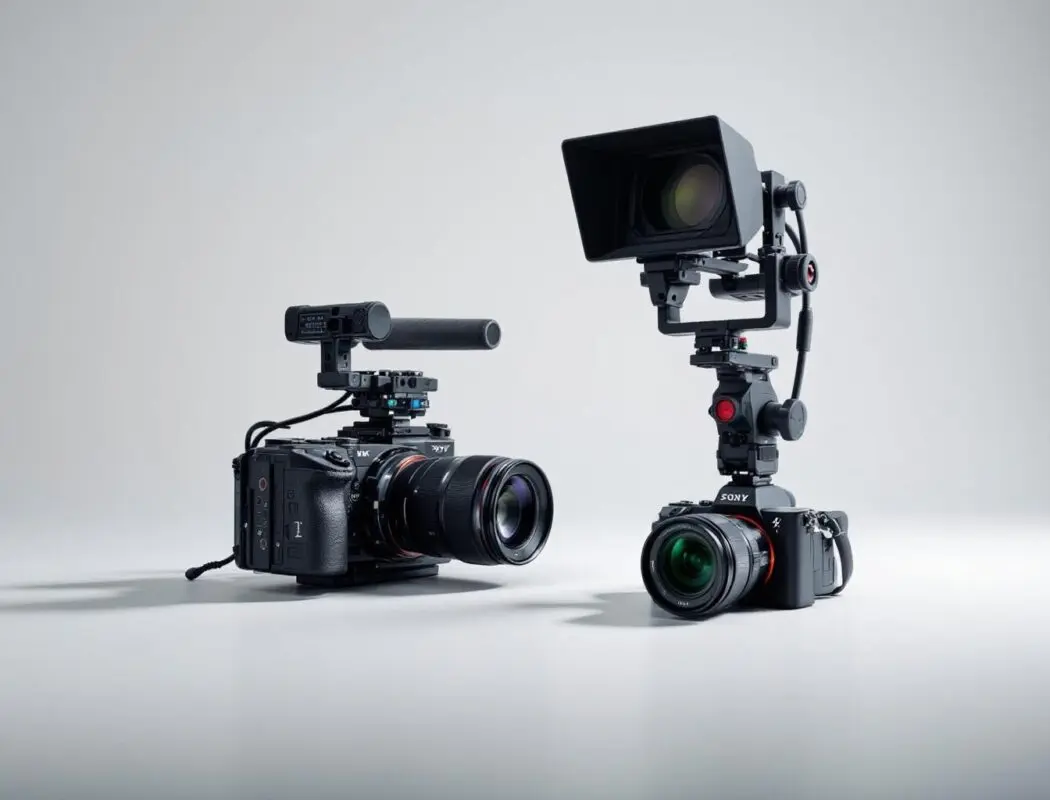
The Sony FX3 and A7S III share the same 12.1MP full-frame sensor, the same base ISO performance, and the same core video specifications. They cost nearly identical amounts. And yet they’re designed for fundamentally different working contexts. Choosing between them requires understanding which one fits the way you actually shoot — not which one has better spec sheet numbers.
This breakdown covers the real differences between the FX3 and A7S III, which situations each excels in, and what type of shooter belongs behind each camera.
The Core Difference: Cinema Body vs Hybrid Body
The A7S III is a hybrid mirrorless body. It has a traditional camera grip, a tilting LCD, a standard hot shoe, a conventional button layout, and a complete stills shooting interface. It’s a camera that can shoot stills when you need it, video when you need it, and transitions between those modes quickly.
The FX3 is a cinema body. It has no traditional grip — instead a flat cinema-style chassis with four cold shoe mounting points for accessories. The form factor assumes you’re building a rig: you’ll appreciate the more affordable Cinema Line option if you’re looking for similar functionality without the professional-grade price tag.
Everything else that differs between these two cameras flows from this single design philosophy difference.
Body Design and Rigging
The FX3’s flat-body cinema design means it sits lower and more stably on a camera cage than the A7S III. When you rig both cameras for a run-and-gun video shoot with a wireless transmission system, external monitor, microphone, and follow-focus, the FX3’s distributed mounting points create a more balanced, ergonomically sensible build. The A7S III‘s traditional grip creates a more top-heavy, awkward rig geometry under similar accessory loads.
The FX3 has 4 standard cold shoe mounting points positioned for practical accessory placement. It includes a full top handle in the box — an accessory that costs extra for A7S III shooters. The handle has built-in controls for recording, AF, and iris, enabling operation from above the camera in low-angle and overhead shooting positions.
The A7S III’s advantage: if you’re shooting handheld without a rig, the traditional grip is significantly more comfortable for extended handheld sessions. Holding a flat cinema body for 6+ hours of event coverage is physically fatiguing in a way the A7S III’s grip shape isn’t.
Audio: The FX3’s Significant Advantage
Audio is where the FX3 pulls decisively ahead of the A7S III for professional video applications. The FX3 includes 3.5mm audio input, headphone output, and — critically — a Multi-Interface Shoe that accepts Sony’s XLR-K3M or XLR-K4 adapter, enabling two channels of professional XLR audio without leaving the Sony ecosystem.
The A7S III has the same 3.5mm audio I/O and MI Shoe compatibility. The practical difference is the FX3’s audio pre-amps are tuned for cinema production use with lower noise floor and better gain structure at professional mic levels. Dialogue recording through an XLR-connected Sennheiser MKH 416 or similar professional boom microphone sounds cleaner through the FX3’s signal chain than through the A7S III.
For music video, documentary, or any production where sync sound quality matters, the FX3’s audio handling is worth considering on its own.
Identical Video Specifications
Here’s where the two cameras are genuinely equal:
| Specification | Sony FX3 | Sony A7S III |
|---|---|---|
| Sensor | 12.1MP Full-Frame BSI | 12.1MP Full-Frame BSI |
| Base ISO (Video) | ISO 800 | ISO 800 |
| Extended ISO | ISO 80–409,600 | ISO 80–409,600 |
| 4K Max Frame Rate | 4K 120p (Super35) | 4K 120p (Super35) |
| 4K Full-Frame | Up to 60p | Up to 60p |
| 10-bit Recording | 4:2:2 internal | 4:2:2 internal |
| S-Log3 | Yes | Yes |
| S-Cinetone | Yes | Yes |
| IBIS | 5-axis | 5-axis |
| Dual Card Slots | CFexpress Type A + SD | CFexpress Type A + SD |
If you put the same lens on both cameras and shoot the same scene with identical settings, the resulting footage is pixel-level identical. The sensor is the same. The color science is the same. The dynamic range is the same. The low-light performance is the same.
Stills Capability: A7S III Wins Clearly
The A7S III has a complete stills shooting interface with a physical mode dial, dedicated stills AF modes, and all the menu infrastructure for professional still photography. At 12MP, the files are limited for print work, but the camera functions as a genuine hybrid tool for events, photojournalism, or documentary work where both stills and video are delivered.
The FX3 technically shoots stills, but the interface is rudimentary. There’s no physical mode dial, no dedicated burst shooting controls, and the stills workflow feels bolted-on rather than designed. For any serious stills work, the FX3 is not the right tool.
LCD and Monitoring
The A7S III has a fully articulating LCD that folds out completely. This is genuinely useful for self-monitoring in vlogging scenarios, overhead shots, and low-angle work where you need to see the frame without being behind the camera.
The FX3 has a tilting rear LCD — it goes up and down but doesn’t swing out to the side. For cinema rigging purposes, the assumption is that you’ll use an external monitor (SmallHD, Atomos, etc.) for serious monitoring. The built-in screen serves primarily for menu navigation and quick reference.
EVF: A7S III Only
The A7S III has a 9.44M dot OLED EVF. The FX3 has no EVF — the flat cinema body form factor assumes monitor-based operation. This is a meaningful difference for solo operators in bright daylight environments where rear LCD visibility is compromised. A7S III shooters can put their eye to the EVF and see accurately. FX3 shooters need a hooded external monitor or shade accessories.
Price
Both cameras launch and sell within $200–300 of each other, typically in the $3,500–3,800 range. The FX3’s advantage is that its accessories are designed cinema tools — the included top handle has genuine production value. The A7S III’s additional accessories (L-bracket, cage, monitor arm, etc.) represent add-on costs to reach a similar rigging capability level.
Who Should Buy the FX3
- Videographers who primarily work with rigged builds and external monitors
- Filmmakers shooting scripted content where audio quality matters and rigs are planned
- Corporate video and documentary cinematographers
- Shooters who never need to shoot stills professionally
- Anyone building a Sony cinema ecosystem (FX3 → FX6 → FX9 path)
Who Should Buy the A7S III
- Hybrid photographers who need both video and stills capability
- Event photographers/videographers who deliver both photo and video
- Vloggers and content creators who want a lighter, simpler setup
- Shooters who frequently operate handheld without a rig
- Anyone who values the articulating LCD and EVF for monitoring flexibility
FAQ
Is the FX3 better than the A7S III for filmmaking?
The FX3’s cinema body design makes it more practical for scripted film production where rigging and audio are planned. The image quality is identical. “Better for filmmaking” depends on whether your production workflow involves rigged builds (FX3 wins) or run-and-gun flexibility (A7S III wins).
Can the FX3 use the same lenses as the A7S III?
Yes. Both cameras use the Sony E-mount. Every FE lens is fully compatible with both bodies, including all autofocus, IBIS communication, and optical stabilization features.
Does the FX3 have better autofocus than the A7S III?
No. They use the same autofocus processing system and phase-detect coverage. AF performance is effectively identical between the two cameras.
What’s the recording time limit on the FX3 vs A7S III?
The FX3 has no recording time limit — it records until the card is full or battery is dead. The A7S III also has no practical recording time limit for 4K recording (Sony removed the 29-minute cap in firmware updates). Both are suitable for long-form recording applications.
Should I upgrade from the A7S III to the FX3?
Only if your workflow has shifted toward cinema-style rigged production where the FX3’s body design and audio capabilities are daily advantages. If you still shoot a meaningful volume of stills, or if you work handheld without a rig regularly, stay with the A7S III. Selling an A7S III to buy an FX3 for image quality reasons is not justified — they’re the same sensor.